
Zadock Amanyisa | Tayari News
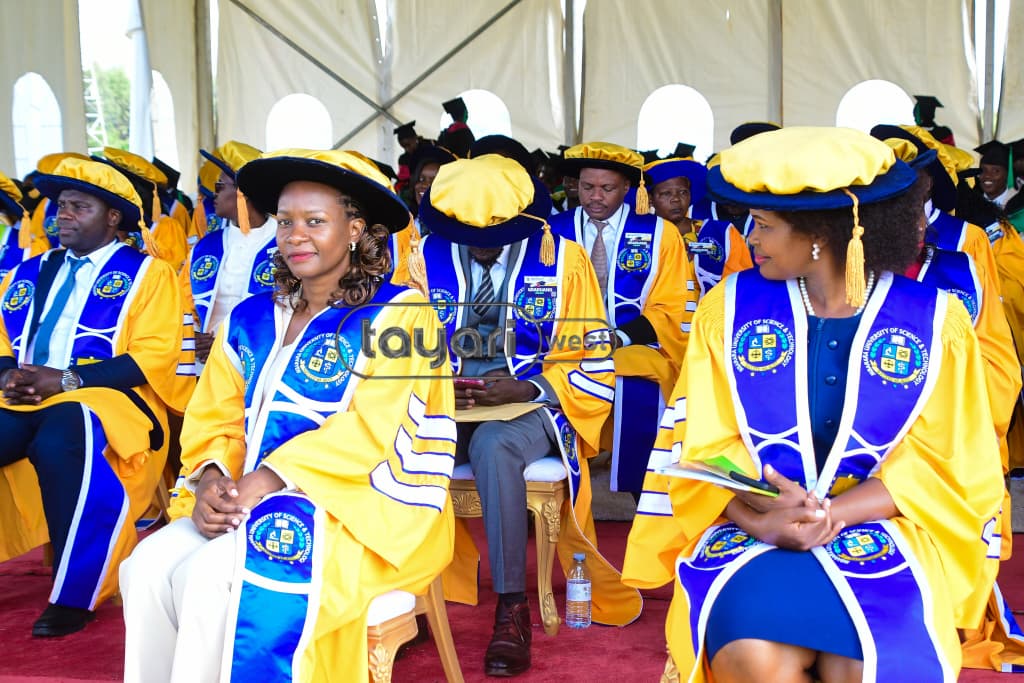
MBARARA- On Thursday, 29th October, 2026, Mbarara University of Science and Technology (MUST) held its record 33rd graduation ceremony at its Kihumuro main campus located along the Mbarara-Ishaka road in Mbarara City.
After years of patience, hard work, resilience, and sleepless nights, up to 1,670 graduands received awards after completing their undergraduate and postgraduate programs. Out of 1670 graduands, 1,012 were male, and 658 were female.
49 Doctor of Philosophy students graduated, compared to 31 in 2025. The 49 PhDs were out of the 376 postgraduate awards. The class of 2026 is the largest graduating class in the history of MUST.
While addressing the gathering of the day, MUST Vice Chancellor Prof. Pauline Byakika-Kibwika said that the community was not merely celebrating academic achievement, but also celebrating the knowledge, the resilience, the innovation, and the promise of a better future. The event celebrated human potential, perseverance and the transformative power of education.
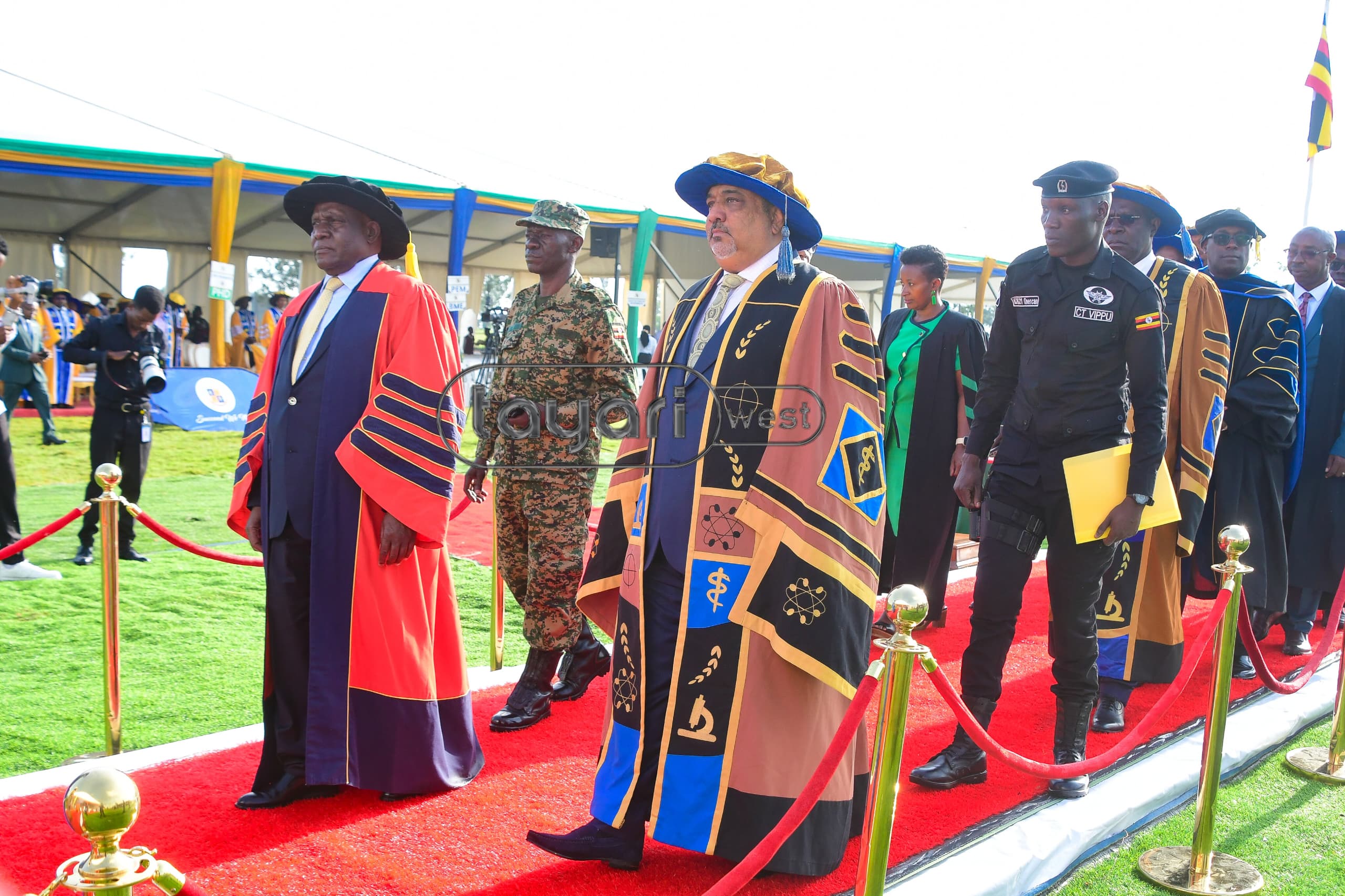
“We also celebrate MUST’s progress as a university committed to producing not only graduates but solutions to the challenges facing Uganda and the wider region.
The Professor of Internal Medicine and Epidemiology was elated that the number of female graduands had increased.
“We are also encouraged that the proportion of female graduands has increased from 31.7% in 2025 to 39.4%, representing 659 graduands.”
Brief background
MUST was established on October 28, 1989, by the Mbarara University of Science and Technology Statute, 1989. This establishment resulted from the government’s recognition that higher education is critical for nation-building, with science and technology being the most practical drivers of this effort. The original statute was repealed and replaced by the Universities and Other Tertiary Institutions Act, 2001 (as amended).
MUST operates two campuses, the Mbarara City Campus and the Kihumuro Main Campus. The Mbarara City Campus, located along the Mbarara–Kabale highway, lies near the banks of the River Rwizi, while the Kihumuro Main Campus, 7 km away, sits on over 400 acres of land also crossed by the River Rwizi. The presence of River Rwizi on both campuses is a double blessing, enhancing environmental learning and reinforcing the university’s community-based education approach.
Areas of concern
According to the Vice Chancellor, MUST growth is taking place under serious resource constraints. She explains that the overall staffing level stands at approximately 31% of the approved establishment while academic staffing is only at 25%. This, she says, affects teaching, supervision, research promotions and the capacity to implement competence-based education to the expected standard.
As part of accountability to stakeholders, the Vice Chancellor indicated that demand for admission at the Mbarara-based science and technology university remained high, noting that MUST registered 6796 students in the 2026-27 academic year and offers 36 undergraduate and 54 graduate programs.
Mentioning that the University can admit only 1 in 7 applicants, Prof. Byakika revealed that the university was grappling with staffing challenges, particularly in the Bachelor of Science program.

The recent staffing challenges affecting the Bachelor of Science program at MUST have reinforced the importance of succession planning and adequate specialised staffing, as well as academic leadership, adding that a lot is being put together to fill the gaps.
“We have taken measures to strengthen staffing and sustain teaching and learning while pursuing longer-term solutions. Our priority remains the welfare of students and the integrity of our academic programs.” Prof Byakika noted
While the student enrollment has grown from the initial 43 in 1989 to the current 6796 students, re-echoing the Vice Chancellor’s highlight that the University is admitting only 1 in 7 applicants, the University Chancellor, Prof. Jack H. Pen-Mogi Nyeko told the Chief Guest, the President Yoweri Kaguta Museveni who was represented by the Second Deputy Prime Minister, Dr. Chrispus Kiyonga and other guests that “so many deserving applicants are unable to assess our quality education because of our limited capacity to take on more students.”
The University is seeking the government’s support for a phased enhancement of the university wage bill to attain at least 50% staffing within the next five years.
The submitted proposal provides for 17.5 billion Ugandan shillings in year one, and 9.57 billion in each of years (2-5) for recruitment, promotion and salary enhancement for staff.
The officials believe that strengthening MUST staffing is an investment in the quality of Ugandan professionals, researchers and innovators.
While the government supports the university with annual research and innovation funding allocation of 1 billion shillings, the scale of national challenges and rapidly growing research capacities call for more substantial support.
They want the annual research and innovation funding increased to at least 15 billion per year, as this will strengthen their ability to undertake high-impact research, develop and commercialise innovations, support young researchers and PhDs and translate knowledge into tangible national benefits.
College of Health Sciences
The University is currently constructing a world-class College of Health Sciences to provide a modern learning experience for students, enhance the quality of services provided to the community, and attract both local and international scholars through close collaboration with all stakeholders.
So far, 19.2 billion shillings has been provided by the government to complete phase one out of the 96.7 billion required to complete three phases of the project. In her speech on the graduation day, Prof. Byakika asked for more funding for the project to be completed. Upon completion, the college could be the best in East Africa and the region.
“We further appreciate the 19.2 billion shillings that have been provided by the Government of Uganda towards phase one of the MUST College of Health Sciences construction. This is against the reported phase one budget of 96.7 billion shillings and the overall budget of 188 billion for the 3 phases for completion of this College of Health Sciences. We request continuous and timely funding of this facility to strengthen the training of health professionals and expand Uganda’s health research capacity.” She requested

The Chancellor, Prof. Nyeko, argues that increased funding will enable MUST to recruit and retain academic staff, the technical and administrative staff, strengthen research and innovation, equip the laboratories and improve essential learning facilities including lecture rooms, libraries, student accommodation.
“These investments will enhance the quality of training, expand research capacity and enable MUST to respond more effectively to national development.” He says
Upon completion, the facility will significantly boost the university’s capacity to train the next generation of professionals who are critical to Uganda’s health care system and national development.
Key milestones
The highlighted challenges and needs have not stopped MUST’s mission of providing quality and relevant education at the national and international level with particular emphasis on Science and Technology and its application to community development.
The graduate tracer study carried out by the University, according to the Vice Chancellor, indicated that 80.5% of alumni who graduated before 2025 were employed and 88.6% of the employed respondents were working in the fields related to their training at MUST.
In September 2026, MUST entered the Times Higher Education (THE) World University Rankings for the first time, featuring in the 2027 edition in the 1,601–1,800 band.
The 2027 edition, released on 30 September 2026, marks MUST’s debut in THE’s flagship global university ranking. The University’s inclusion places it among the institutions assessed through THE’s global framework for research-intensive universities.
The entry also places MUST among the 69 universities from 16 sub-Saharan African countries included in the 2027 rankings. Across the world, the edition covers 2,297 institutions from 118 countries and territories, making it the most extensive edition of the rankings to date.
The newly established Faculty of Agriculture, Environment and Veterinary sciences that opened in August 2026 is expected to expand MUST contribution to agro-industrialisation, food systems, environmental sustainability and one health. The university intends to grow the new faculty into a centre of excellence
The Faculty is not just an academic expansion; it is a direct, calculated response to the challenges inhibiting regional growth, explicitly aligned with Uganda’s National Development Plan IV (2025/26–2029/30) and the global Sustainable Development Goals (SDGs).
Strategically situated in Southwestern Uganda, vibrantly known as the “land of milk and honey”, FAEVS is uniquely positioned to unlock the region’s immense agricultural potential. Through cutting-edge student training, pioneering research, and deeply rooted community engagement, the Faculty addresses the exact bottlenecks inhibiting regional growth while directly championing national and global development frameworks.
The Faculty of Computing and Informatics, which graduated 7 PhDs on 29th October, is strengthening work in artificial intelligence, cyber security, and digital innovation, including initiatives to encourage the girl-child into computing and technology. The Faculty of Science also graduated 16 PhDs.
The first cohort of 30 students in civil engineering and 14 in mechanical and industrial engineering also graduated this year. These programs represent a significant step in building Uganda’s technical and industrial capacity.
Research
The University has also operationalised the MUST research institute to strengthen research governance, interdisciplinary collaboration, research and innovation and commercialisation. A strategy is already in place to make MUST a powerful force in research and innovation.
The research Institute is MUST’s coordinating hub for multidisciplinary Research, Innovation and Commercialization. Established to strengthen the University’s research ecosystem, the Institute brings together research centres, specialised units, faculty research groups and independent investigators to foster collaboration, mobilise resources, accelerate commercialisation, and generate evidence-based solutions for sustainable development.
The University currently runs 93 externally funded active research projects with a reported combined value of 53.8 billion Ugandan shillings. They have further established the MUST Journal of Science, Management and Community Transformation and continue to hold their annual research dissemination conference. This year, MUST hosted the 9th AFREhealth International conference that brought together over 300 delegates from 15 African countries and beyond.
“Our policy and economic data centre is generating evidence-informed national policy, including on the Parish Development Model and Local Government Revenue. Our centre for innovation and technology transfer has supported 21 innovation teams towards market validation and facilitated registration of 9 intellectual property assets.” Prof. Byakika affirms
Through MUST Holdings Company Limited, the University is working to translate and commercialise innovations into viable products and services, including initiatives to provide access to safe drinking water at both campuses.
Through Community-based education, research and service, MUST students undertake practical learning at 73 placement sites across the country, including rural and hard-to-reach communities. They learn that professional excellence is inseparable from service.
All efforts work towards enabling the university to advance on its mandate of Science and Technology, research and innovation. Some of the investments will be essential to meet the needs of this growing institution, according to Prof. Nyeko.
Competence-based training
MUST is preparing for the rollout of Competence-based education and training in the next 2027-28 academic year. This, the Vice Chancellor says, is a fundamental shift towards demonstrated competencies, practical skills, problem-solving, professional values and innovation.
The global shift toward competence-based education and training reflects an urgent need for education systems to produce graduates who are not only knowledgeable but capable of applying skills in real-world contexts. In response to this paradigm, the Ugandan Government, the Ministry of Education in particular, has deemed it necessary for Uganda’s education system to evolve to ensure relevance, quality, and alignment with both national development goals and international best practices.

In competence-based education and training, learners advance at their own pace and demonstrate competencies through authentic assessments.
Prof. Byakika: “We want every MUST graduate to be academically sound, work-ready, adaptable and capable of creating opportunities for others. We are determined that MUST should increasingly be known for the problems we solve, the policies we influence, the technologies we develop and the lives we improve.
Sanjay Tanna, the Minister of Trade, Industry and Cooperatives says rolling out competence-based education and training curriculum in 2027 academic year will ensure that graduates are equipped with skills and competencies, creativity, work ethics and entrepreneur mindset required by the labour market and the growing economy.
“Most doctors have failed to be good businessmen. They have failed to run their own clinics; they have failed to run their own hospitals because they never learnt financial literacy, and the biggest problem across the nation is that we have one of the most entrepreneurial populations. We are very good at starting businesses. We want to congratulate MUST on taking this initiative in creating a holistic approach in bringing out what a person needs when he or she gets out there.” Minister Tanna remarked on the graduation ceremony.
Government makes commitments
According to the Hon. Phyllis Chemutai, the State Minister for Primary Education, who represented the Minister of Education and Sports at MUST’s 33rd graduation ceremony, the Government of Uganda recognises higher education as a critical driver of national development, and Universities are central to the creation of knowledge, innovation, and research skills necessary for transforming the country.
“As a ministry, we remain committed to strengthening public universities through investment in infrastructure, teaching and learning facilities, digital transformation, research and innovation.” The Minister said, adding that the ongoing construction of the College of Health Sciences at MUST demonstrates the government’s commitment to strengthening health sciences education, expanding student learning capacity and enhancing medical research and improving the quality of health care professionals produced by this institution.
Encouraged by the establishment of a research institute and its efforts to develop an entrepreneurship centre under the institute, the Minister says the initiative demonstrates the University’s commitment to nurturing innovation and enterprise among young people, which will in turn equip them with the skills and mindset required for self-employment, job creation and national development.
“Government remains committed to supporting initiatives that nurture entrepreneurship and innovation, enabling young people to translate ideas into productive ventures that create employment, enhance competitiveness and bring about economic transformation.” Minister Chemutai noted
While responding to the appeals, the Chief Guest, the President Yoweri Kaguta Museveni, was represented by the Second Deputy Prime Minister, Dr. Chrispus Kiyonga pointed that Uganda needs scientists, innovators and problem solvers.
“Science is the prime spark of socio-economic transformation. That’s why the National Resistance Movement (NRM) government insists that 70% of government-sponsored students go into science disciplines. The Government remains committed to supporting higher institutions of learning and improving staff welfare step by step as our economy grows.” The head of State said in his message.
Contact Reporter:
Phone: +256-706139795/+256-782711457
Email: zadock.amanyisa@gmail.com