
Job Namanya | Tayari News
RUBANDA – The Rubanda District Chairperson Stephen Kasyaba, has called upon the Office of the Prime Minister to decentralise more authority and public funds to local governments, arguing that such a move would significantly improve service delivery, efficiency and timely response to emergencies across the country.
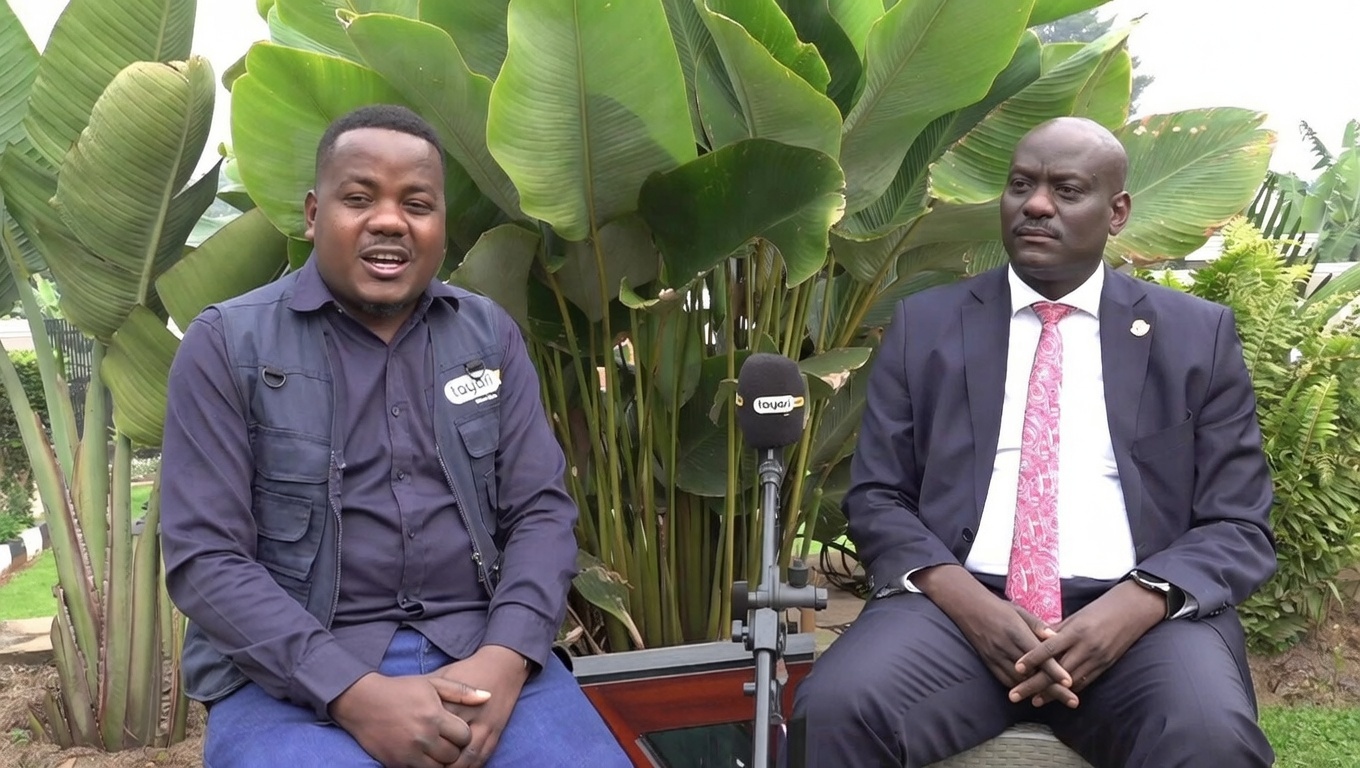
Kasyaba made the remarks on Tuesday 25th February during an interview with our reporter in Kabale Municipality.
Speaking with conviction, the district leader emphasised that while decentralisation is enshrined in Uganda’s governance framework, key financial powers, especially those relating to disaster response, remain heavily centralised.
According to Kasyaba, authority and emergency funds meant to address national disasters should not remain exclusively under the control of the Prime Minister’s office in Kampala when the actual disasters occur in remote villages and sub-counties.
“Disasters do not occur in Kampala boardrooms. They occur in communities in villages, in parishes, in sub-counties. It is the local governments that are first on the ground when floods sweep away homes or when landslides bury gardens,” Kasyaba noted.
Rubanda District, like many districts in the Kigezi sub-region, is prone to natural hazards such as landslides, heavy rains and destructive storms due to its hilly terrain. Kasyaba explained that when such disasters strike, district leaders are often left scrambling to mobilise limited local resources while waiting for financial support from the central government.
He observed that disaster funds are currently managed by the Office of the Prime Minister, meaning districts must formally request assistance through bureaucratic channels before resources are released.
“The process of accessing these funds takes time. By the time approval is granted and money is disbursed, families have already spent days or even weeks without shelter, food or medical support,” he said.
Kasyaba argued that this delay undermines the very purpose of emergency funding, which is meant to provide rapid relief and stabilise affected communities.
“If emergency disaster funds were placed directly at the district level, local governments would respond immediately. We know the terrain. We know the people. We understand the urgency,” he emphasised.
He proposed that a structured accountability framework be developed to ensure transparency and prevent misuse of funds while still empowering districts with financial autonomy.
Beyond disaster management, Kasyaba used the opportunity to reflect on the development journey of Rubanda District since its creation in 2016. He described the district’s progress as steady and transformative despite resource constraints.
“When Rubanda was established, we faced enormous challenges,” he recalled. “We had limited infrastructure, staffing gaps and high service delivery demands. But over the years, we have made measurable progress.”
Health Sector Transformation
In the health sector, Kasyaba revealed that Rubanda District has constructed and operationalised a district hospital a milestone achievement for a district that previously relied heavily on facilities outside its jurisdiction.
The hospital, he said, is still undergoing additional construction works under a contract managed by the Uganda People’s Defence Forces engineering brigade.
“We are expanding infrastructure to ensure that the hospital meets the growing needs of our population,” Kasyaba explained.
He added that the district is currently in the process of recruiting more health workers to strengthen service delivery and reduce workload pressures on existing staff.
In addition to the district hospital, efforts are underway to upgrade one of the health facilities to Health Centre IV status. Such an upgrade would enable the facility to offer surgical services, blood transfusions and advanced maternal care.
Kasyaba noted that several health centres in the district now have three professional doctors, a significant improvement compared to previous years when facilities were understaffed.
“We have also constructed maternity wards in different parts of the district,” he said. “Previously, mothers had to travel long distances to Kabale Regional Referral Hospital for better maternal and emergency services.”
He explained that the new maternity wards are helping reduce referrals, lower transport costs for families and improve maternal and infant survival rates.
“Good health is central to productivity and development,” Kasyaba stressed. “If people are sick, they cannot work. If mothers are weak, families suffer. A healthy population contributes directly to economic growth.”
He added that the district leadership remains committed to equipping facilities with essential drugs and medical supplies, though funding gaps remain a challenge.
Investment in Education
Turning to education, Kasyaba said Rubanda District is investing heavily in improving standards and ensuring competitiveness among learners.
“Education is the foundation of development. If we invest in our children today, we are securing the future of Rubanda,” he remarked.
He revealed that the district has recruited 155 primary school teachers onto the government payroll, significantly reducing teacher shortages in rural schools.
“We still have gaps, but we are planning to recruit an additional 40 teachers to ensure that every child has access to quality instruction,” he said.
Over the past five years, Rubanda District has also secured three seed secondary schools in Ruhiiga, Kibuzigye and Nyamweru. These schools were established to expand access to secondary education in underserved areas.
“Before these seed schools were introduced, many learners had to travel long distances to access secondary education. Some dropped out because of transport challenges or financial constraints,” Kasyaba explained.
The new schools, he said, are helping bridge that gap and encouraging transition from primary to secondary education.
In a further push to promote skills development, the district plans to construct a government technical school this year, funded with more than 3 billion Uganda shillings.
The technical school will provide vocational training in trades such as carpentry, tailoring, mechanics and information technology, offering alternatives for students who do not proceed to university.
“Not every child will go to university. But every child deserves an opportunity to acquire skills that can earn them a livelihood,” Kasyaba noted.
He described the planned technical institution as a game-changer that will reduce unemployment and boost household incomes.
Infrastructure and Governance
Although health and education dominated the discussion, Kasyaba also acknowledged progress in infrastructure development, including road maintenance and community access roads that facilitate trade and agricultural marketing.
However, he reiterated that for districts like Rubanda to fully unlock their potential, financial decentralisation is critical.
“Local governments understand their priorities better than anyone else. When funds are centralised, local initiatives slow down. But when districts are empowered, development accelerates,” he argued.
Kasyaba’s call for decentralisation comes amid ongoing national conversations about improving governance efficiency and strengthening service delivery at grassroots levels.
As Rubanda District approaches a decade since its establishment, its leadership appears determined to push for greater autonomy while building on achievements in health, education and infrastructure.
“We are proud of what we have achieved so far. But we know there is more to be done. With more authority and timely access to funds, districts like ours can respond faster, serve better and transform communities more effectively,” Kasyaba said.