
Adolf Ayoreka | Tayari News
MBARARA – Stakeholders, including Academic researchers from Mbarara University of Science and Technology, civil society organisations, and government institutions like the Ministry of Water and Environment, are implementing a research project to examine the effectiveness of international and national policy responses to climate change and how to operationalise recommendations that meet the socio-economic needs of climate migrant to fully integrate in urban host communities.
The three-year research project dubbed “Climate adaptations and Resilience strategies; socio-economic vulnerabilities among urban migrants in the Lake Victoria basin and Great Lakes region” is going to be conducted in cities including Kampala, Mwanza, Eldoret, and Ontario.
The project focuses on finding out how urban cities are prepared to receive climate migrants in terms of providing social services, integration and ensuring that pressure on the existing environment and ecological system is minimised.
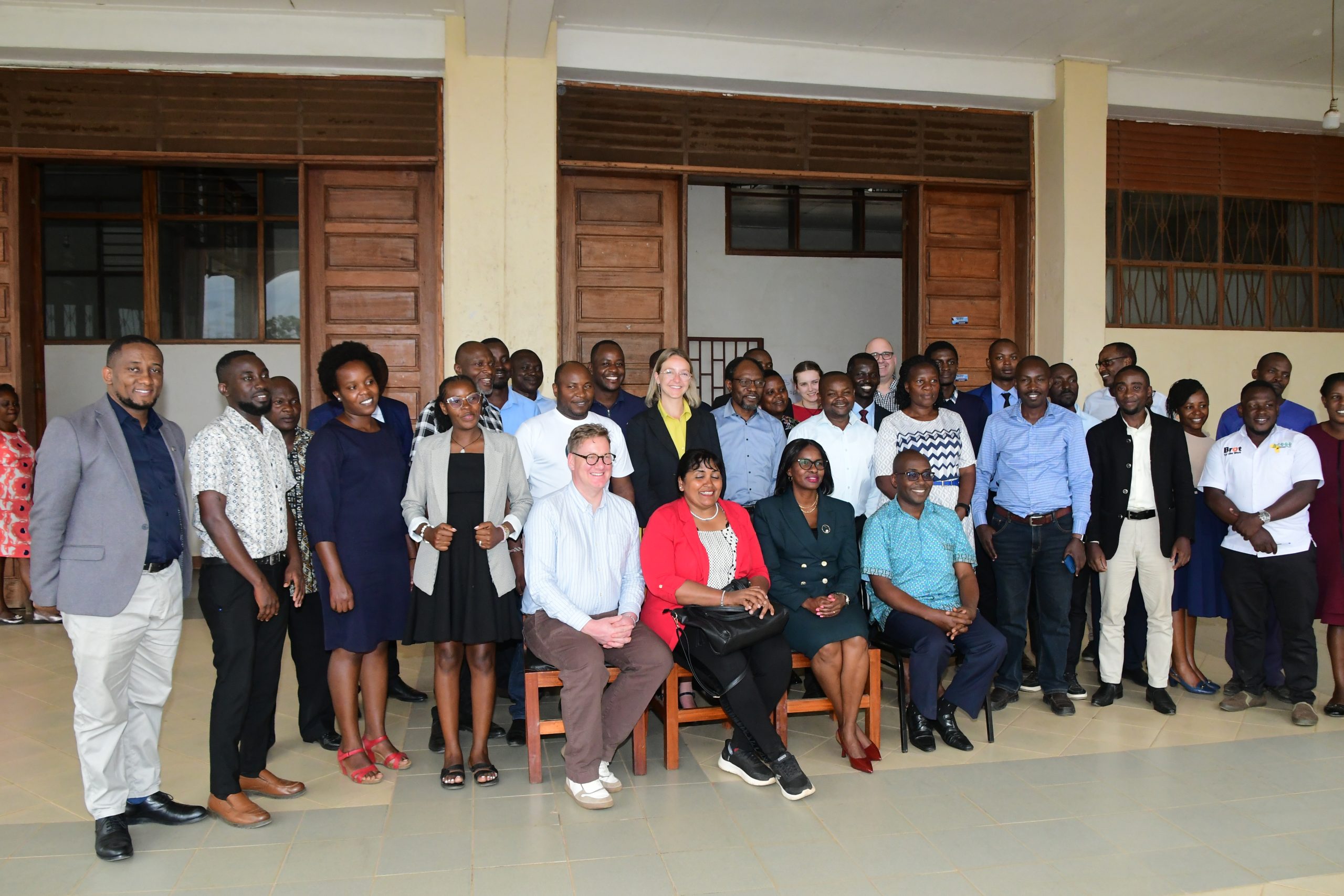
The project was unveiled in a two-day stakeholders’ workshop that was held at Mbarara University of Science and Technology resource centre on February 18th 2026.
Dr Wendo Olema, the Dean of the Faculty of Interdisciplinary Studies at Mbarara University of Science and Technology, noted with concern that climate change is reshaping where people can live, work and build stable futures.
Dr Olema asserted that the research project intends to find out how climate-related pressures shape the lives of climate migrants and the community receiving them, especially through socio-economic vulnerabilities that affect access to services.
He revealed that climate-related pressures not only affect ecosystems, but also influence livelihoods, access to services, the safety of housing and resilience of families.
“In many contexts, these pressures interact with urban migration, creating new patterns of vulnerability and opportunity”, said Dr Wendo.
“As the university, we are committed to continuing to be a serious partner in evidence generation, capacity building and in supporting policy-relevant engagement,” she added.
Prof. Pauline Byakikka Kibwika, the Vice Chancellor of Mbarara University of Science and Technology, said that it is evident that along the Lake Victoria basin, there are clear climate variabilities, environmental stress and growing pressures on urban cities and ecosystems around.
She attributed this to human migration, which she said is reshaping the urban cities by exerting too much pressure on the existing ecosystems and other natural resources.
“I’m hopeful that these discussions will contribute much to knowledge generation as well as plans, especially to our students who are looking for topics for research which will in turn help our policy makers to uptake for implementation,” said Prof. Byakikka
She added, “Such engagements underscore our ambitions as a university of science and technology by generating locally grounded and informed knowledge about the effects of climate change through capacity building in supporting public policies through research and innovations.”
Prof. Byakikka urged academicians and researchers to act as bridges connecting the global research experts with local realities and government systems.
“Lake Victoria basin is a shared ecological and socio-economic space, and climate-related migration demands a coordinated cross-border thinking and action, given the fact that we have porous borders, the effects of climate change affect us all, Noted Byakikka.
What will happen after the findings?
Dr Frank Ahimbisibwe, a Senior Lecturer in the faculty of Interdisciplinary Studies at MUST, appreciates the fact that climate change has caused human displacements where people move, especially from villages that are affected by floods and landslides and end up in cities.
Ahimbisibwe noted that it is true that most of the research findings have been shelved and have not impacted society.
“Therefore, with this project, after getting our findings, we shall engage further with policy makers, implementers and civil society organisations to devise means on how the effects of climate change can be mitigated.” Assured Ahimbisibwe
This research project started in 2024 and it will end in 2027 in partnership with McMaster University in Canada, the University of Michigan, Potsdam Institute for Climate Impact Research, and Mbarara University of Science and Technology.