
Enock Ndyamuhakyi | Tayari News
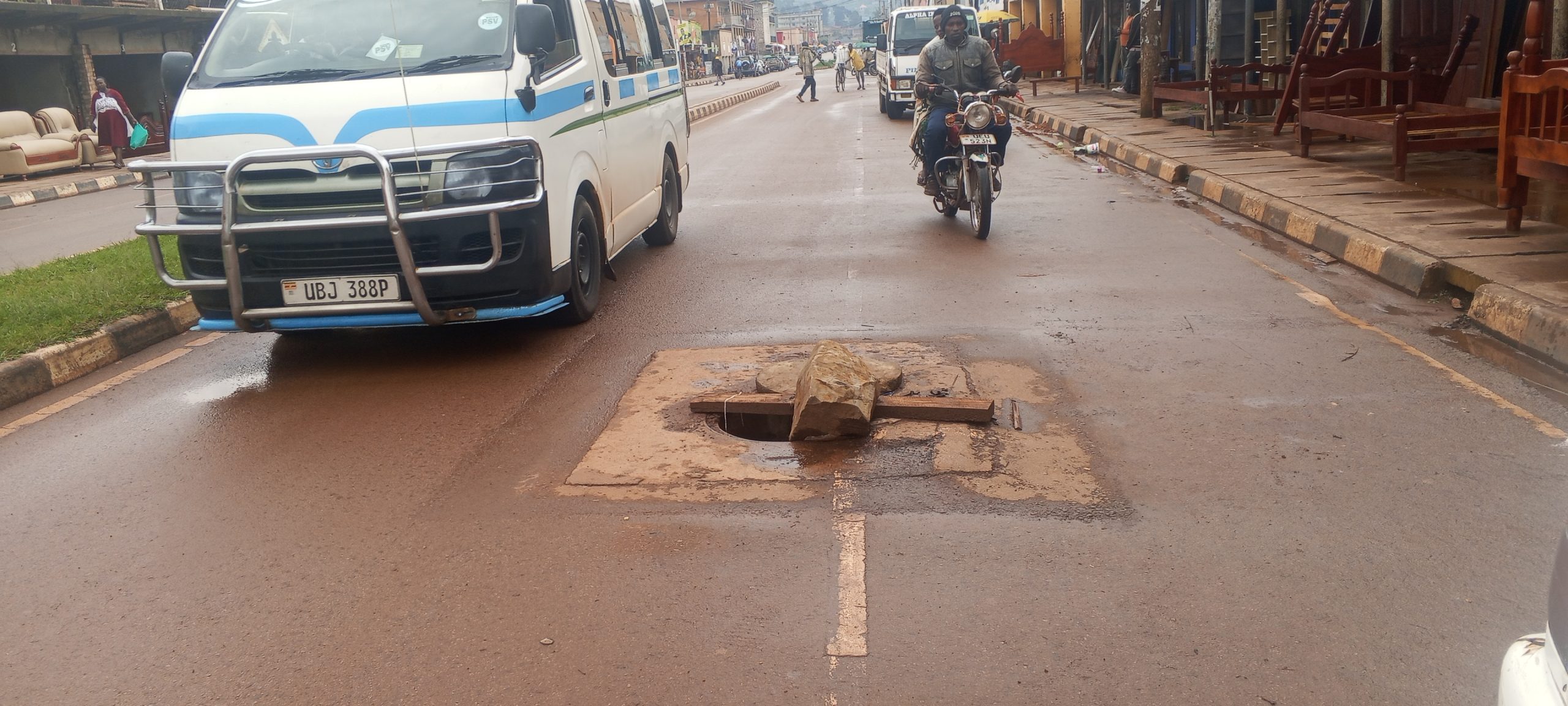
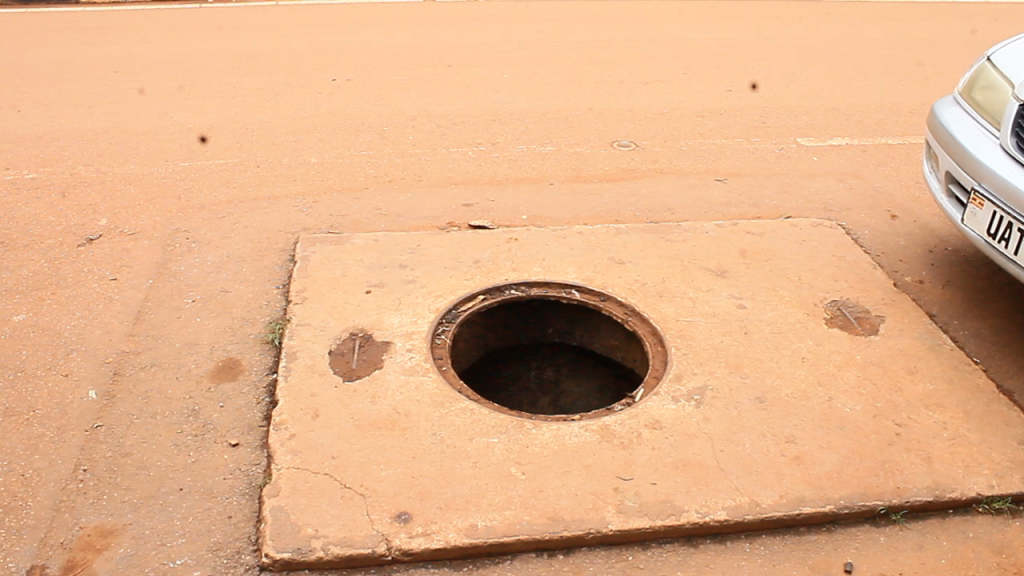
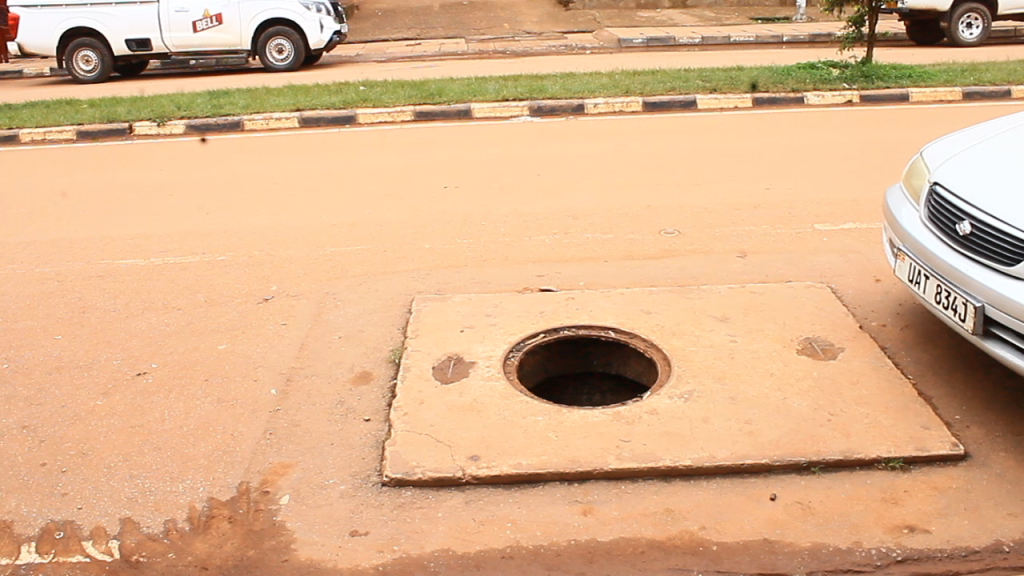
KABALE – Residents of Kigongi Ward in Central Division, Kabale Municipality have expressed frustration over uncovered inspection manholes along the Kigongi Road, which they say have continued to pose serious risks to public safety, health, and livelihoods.
The uncovered manholes, which connect to the Kigongi B sewer line managed by the National Water and Sewerage Corporation, have reportedly become a symbol of neglect in a busy neighbourhood that hosts traders, pedestrians, and motorists throughout the day.
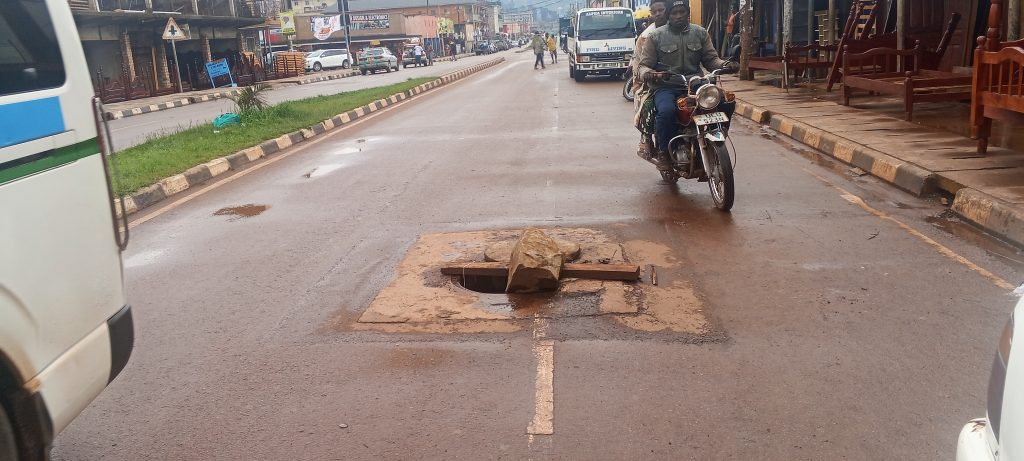
For residents, the danger is no longer hypothetical. Accidents have become common, especially during the rainy season when floodwater covers the open chambers, making them almost invisible to unsuspecting road users. Pedestrians stumble, boda boda riders swerve at the last minute, and traders worry constantly about the safety of their customers.
“This place turns into a trap when it rains,” says Brair Akandinda, who operates a chapati stall just a few meters from one of the open chambers. “You cannot tell where the hole is because it fills with water. People step into it, and some fall. We have witnessed several near-fatal incidents.”
Akandinda explains that heavy rainfall causes the sewer line to overflow, spreading dirty water across the roadside and into nearby business premises. Food vendors like him are particularly affected because customers avoid areas with visible sewage and bad smells.
“When the sewer overflows, everything around here is contaminated,” he adds. “In the dry season, the smell is unbearable. It is not only bad for business, but also dangerous for our health. We fear diseases like cholera and typhoid.” He lamented
Nearby, Joan Tayebwa, who runs a small chips business, shares the same concern. She says the persistent stench has driven away customers and reduced her daily earnings.
“People come, smell the sewer, and leave without buying anything,” Tayebwa says. “We depend on this road for business, but now it is turning into a place people avoid. How can we sell food when the environment is polluted?”
Beyond the impact on businesses, parents and caregivers are worried about children who move freely around the area. Kigongi Ward is densely populated, and many children walk along the road on their way to school or while running errands.
“These chambers are deep and open. A child can easily fall in,” Tayebwa warns. “We fear that one day we will hear of a child losing their life because nothing was done in time.”
Residents say the problem has persisted for months, with several metallic covers stolen and never replaced. The absence of lids has turned ordinary sewer infrastructure into open hazards.
Boda boda riders, who rely on Kigongi Road as a key route, describe the chambers as death traps, especially at night or during bad weather. Innocent Ngabirano, a rider who operates in the area, says the danger increases when visibility is poor.
“At night or when it is raining, you cannot see these holes clearly,” Ngabirano explains. “A rider can easily fall in, and the passenger can get seriously injured. We risk our lives every day.”
Ngabirano believes the theft of metallic covers by scrap dealers has worsened the situation. He suggests that authorities should replace the stolen covers with non-metallic materials that are less attractive to thieves.
“If they use plastic or concrete covers, thieves will not take them,” he says. “That will protect people and save the government from spending money again and again.”
Community leaders have also raised their voices over the issue. John Karisa, a former Kabale Municipal Councillor who represented people with disabilities, says the uncovered chambers pose a special threat to vulnerable groups, including persons with disabilities, the elderly, and children.
“These open chambers are not only dangerous, but they can also be misused for criminal activities,” Karisa warns. “Someone can hide inside them, or they can be used to dump dangerous materials. If nothing is done, we may lose lives.”
Karisa calls on the responsible authorities to act urgently before tragedy strikes.
“This is not a small problem. It is about public safety,” he says. “We want these chambers covered immediately.”
The situation has drawn attention to wider issues of urban infrastructure maintenance and accountability. Residents argue that while sewer systems are meant to improve sanitation, poor maintenance has turned them into sources of danger and disease.
Many also blame improper waste disposal for worsening the problem. They say some residents dump rubbish into the sewer lines, causing blockages that lead to overflows during heavy rains.
When contacted by phone, Patrick Otim, the Kabale Branch Manager of the National Water and Sewerage Corporation, acknowledged the problem and said the corporation is taking steps to address it.
“We are aware of the uncovered inspection chambers along Kigongi Road. Measures are already being taken to solve the problem.” Otim said
He explained that most of the original metallic covers were stolen by scrap dealers, leaving the chambers exposed. To prevent further theft, the corporation has decided to replace them with plastic lids.
“We are in the process of procuring plastic covers to replace the stolen metallic ones,” Otim noted. “These will not attract thieves and will help restore safety along the road.”
Otim also issued a warning to residents against dumping waste into sewer lines, saying such practices block the flow of sewage to decomposition sites and contribute to overflows and environmental contamination.
“When people throw rubbish into the sewer, it causes blockages,” he said. “This is why we see sewage spilling out during the rainy season. We urge the public to use proper waste disposal methods.”
Despite this assurance, residents say they need more than promises. They want immediate action and a clear timeline for when the chambers will be covered.
“We have heard such explanations before,” Akandinda says. “What we want now is action. Every day that passes puts our lives at risk.”
The story of Kigongi Ward reflects a broader struggle faced by many urban communities in Uganda, where rapid population growth and limited resources strain public services. Roads, drainage systems, and sewer lines are essential for healthy living, yet when left unattended, they become hazards instead of solutions.
For traders, the issue is also about survival. Small businesses depend on clean and safe surroundings to attract customers. The foul smell and fear of accidents have already hurt business activity along Kigongi Road, and many fear the situation will worsen if nothing changes.
Parents, riders, and community leaders agree on one thing: uncovered inspection chambers are an accident waiting to happen.
As residents continue to wait for intervention, they hope that the authorities will treat the matter with urgency. For them, covering the open chambers is not just about infrastructure—it is about dignity, safety, and the right to live and work in a healthy environment.
Until then, Kigongi Road remains a daily reminder of how neglected public facilities can threaten lives and livelihoods in the heart of Kabale District.
Hajji Jamil Kasajja, the Town Clerk of Kabale Municipal Council, said, “The municipal authorities are aware of the uncovered inspection manhole in Kigongi, but the public should make a collective effort to protect these inspection manholes because they are being stolen by people involved in the scrap business.”
“People are now dumping their waste in the drainage channels, which is very dangerous to human life.” He added.