
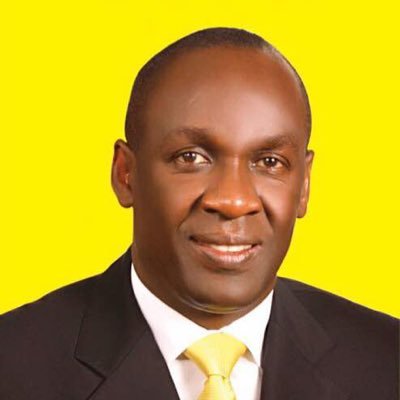
My Support for President Yoweri Kaguta Museveni is not an accident of loyalty, sentiment, or convenience; it is the consequence of ideological alignment, historical evidence, and the hard arithmetic of leadership outcomes. For over four decades, President Museveni has stood as one of Africa’s most consequential statesmen—an architect of stability at home, a guarantor of regional security, and a principled advocate of Pan-African integration.
At the core of President Museveni’s leadership is a clear and coherent ideological foundation. His politics have consistently rejected sectarianism, identity fragmentation, and short-term populism in favour of nationalism, state cohesion, and strategic development. When Uganda emerged from cycles of chaos, militarism, and institutional collapse, it required not rhetoric but structure order before prosperity, unity before ambition. Museveni understood this with rare clarity, and history has vindicated that choice.
The most enduring achievement of his leadership is peace not as a slogan, but as a lived national reality. Uganda’s transformation from a theatre of internal conflict into a stable republic did not occur by chance. It was the result of disciplined state-building, professionalization of the security forces, and a refusal to tolerate armed politics as a substitute for democratic competition. Today, Uganda stands as one of the region’s most stable countries, and more significantly, as an exporter of peace—from Somalia to South Sudan and the Great Lakes region. Stability has become Uganda’s strategic currency, and Museveni its principal steward.
Equally compelling are President Museveni’s Pan-African credentials. Long before regional integration became fashionable rhetoric, he articulated a vision of Africa as an economic and political unit too fragmented to prosper in isolation. His relentless advocacy for the East African Community, common markets, infrastructure connectivity, and ultimately political federation reflects a deep understanding that Africa’s future lies in scale, not fragmentation. In an era defined by continental blocs, Museveni has been ahead of history rather than hostage to it.
Domestically, his governance record reflects a leader who understands that development is a process, not an event. Under his stewardship, Uganda has expanded infrastructure, widened access to education, stabilised the macro-economy, and transitioned from post-conflict recovery to long-term structural transformation. The emphasis on wealth creation, industrialisation, and value addition demonstrates a leader thinking beyond electoral cycles and toward generational outcomes.
Critically, President Museveni’ss longevity in leadership has not been marked by ideological exhaustion. Instead, it has been defined by adaptation—shifting from security consolidation to economic integration, from national reconstruction to regional leadership. This capacity to evolve while maintaining strategic coherence is rare and instructive.
Re-electing President Museveni is therefore not a vote for the past, but a calculated endorsement of continuity where continuity has worked. It is a recognition that in uncertain regional and global times, Uganda benefits from experienced leadership anchored in principle, tested by history, and oriented toward Africa’s collective future.
Leadership is ultimately judged by results, not rhetoric. On peace, stability, Pan-Africanism, and statecraft, President Museveni’s record speaks with authority, and it is for these reasons that he remains deserving of a renewed mandate and national confidence.
Flt Capt. Mike Mukula
Senior Cadre
Chairman
Pan African movement (UGANDA CHAPTER)