
Enock Ndyamuhakyi | Tayari News
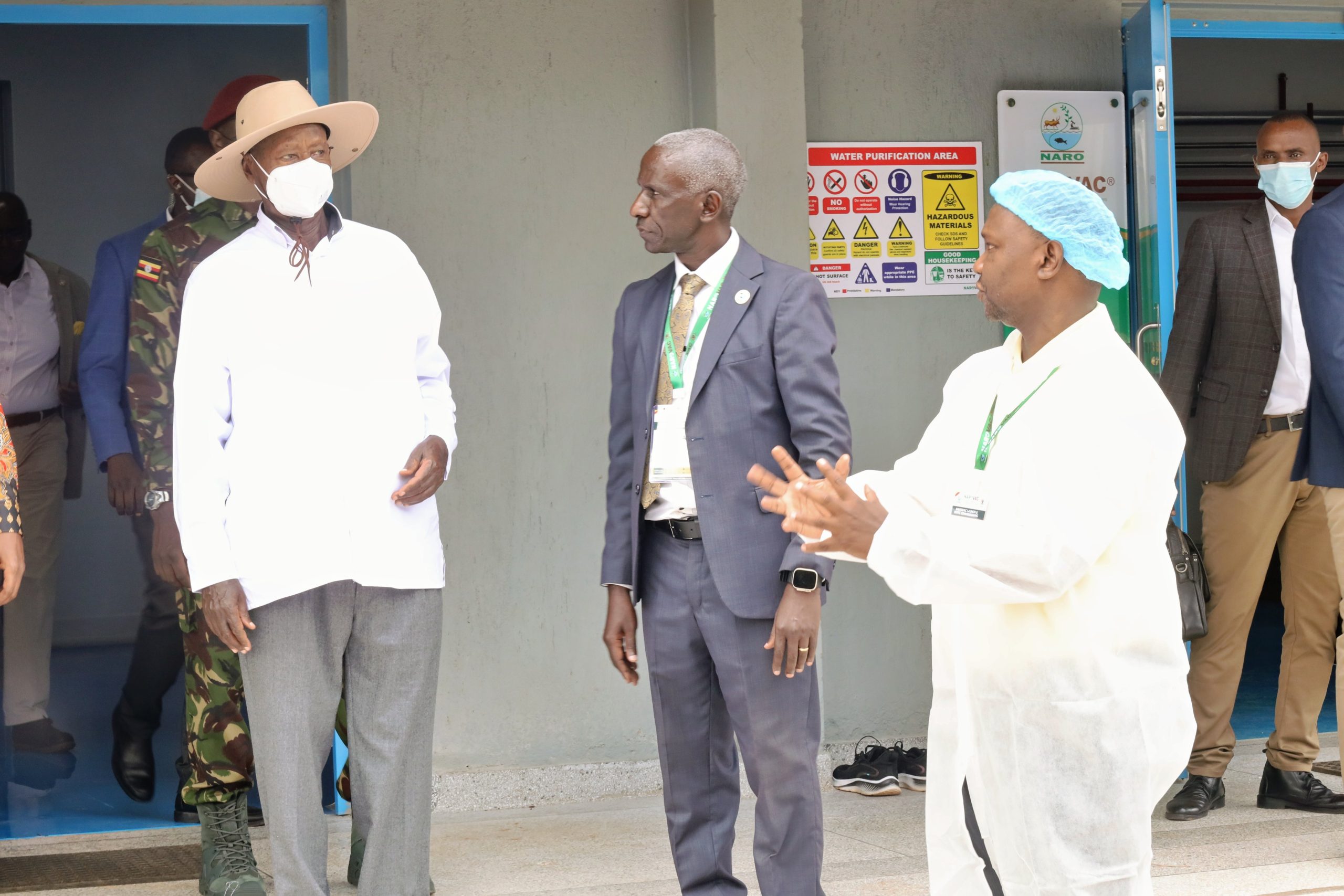
NAMULONGE – President Yoweri Kaguta Museveni has officially launched Uganda’s first locally manufactured Anti-Tick Vaccine and its production facility at the National Livestock Resources Research Institute in Namulonge, pledging Shs600 billion to support the expansion of the National Agricultural Research Organisation Vaccine Hub.
The launch marks a major milestone in Uganda’s scientific and agricultural advancement, with government officials describing the innovation as a breakthrough in combating tick-borne diseases that have long affected livestock farmers across the country.
The Anti-Tick Vaccine project, valued at Shs170 billion, has been funded by the Government of Uganda over several years through research efforts led by NARO scientists to address the growing threat of ticks and related livestock diseases.
Speaking at the launch, President Museveni said the development reflects Uganda’s steady progress in science, technology, and innovation under the National Resistance Movement government.
He noted that Uganda has moved through several stages of development, including economic recovery, expansion, diversification, and value addition, and is now entering a science and technology-driven phase.
Museveni said the locally developed vaccine demonstrates the country’s capacity to produce homegrown scientific solutions to national challenges, particularly in agriculture and livestock production.
The President also confirmed government’s readiness to provide the requested Shs600 billion to establish and expand the NARO Vaccine Hub, which is expected to strengthen vaccine research, production, and innovation.
He said the investment will facilitate the development of more vaccines and scientific products to support Uganda’s agricultural sector and national economy.
The Minister of Agriculture, Animal Industry and Fisheries, Frank Tumwebaze, described the Anti-Tick Vaccine as proof that Uganda’s agricultural research institutions are transitioning from academic research to producing practical, marketable, and globally competitive products.
Tumwebaze revealed that the newly commissioned vaccine manufacturing facility has the capacity to produce 36 million doses annually, which is expected to significantly address Uganda’s livestock vaccine demand.
He added that government plans to strengthen agricultural research across the country’s 16 agro-industrial zones while ensuring farmers directly benefit from ongoing scientific innovations.
State Minister for Animal Industry, Bright Rwamirama, highlighted Uganda’s improvements in animal genetics, nutrition, health, and livestock population growth, attributing the progress to targeted government interventions in the agricultural sector.
Rwamirama appealed to President Museveni to allocate additional resources for adequate vaccine supplies and warned against the continued threat posed by counterfeit and substandard acaricides on the livestock market.
The Director General of NARO, Dr. Yonah Baguma, presented a status report on the operational capacity of the Anti-Tick Vaccine production facility, outlining its readiness to support Uganda’s livestock sector and regional vaccine needs.
Meanwhile, the Executive Director of the National Drug Authority, Dr. David Nahamya, confirmed that the Anti-Tick Vaccine facility has attained all the necessary accreditation requirements for both local and broader markets.
Dr. Nahamya said the vaccine is projected to scale to the East African market and eventually secure international licensure.
He also appealed for government support toward the Shs600 billion funding request to enable the establishment of a larger NARO Vaccine Hub capable of producing more vaccine varieties.
The Permanent Secretary in the Ministry of Agriculture, Animal Industry and Fisheries, Rt. Maj. Gen. David Kasura, highlighted the devastating impact of tick infestations on Uganda’s cattle industry, expressing optimism that the locally developed vaccine will offer lasting relief to livestock farmers.
The launch of the Anti-Tick Vaccine is expected to reduce livestock losses, lower production costs, and improve the quality and competitiveness of Uganda’s animal products in regional and international markets.