
Enock Ndyamuhakyi | Tayari News
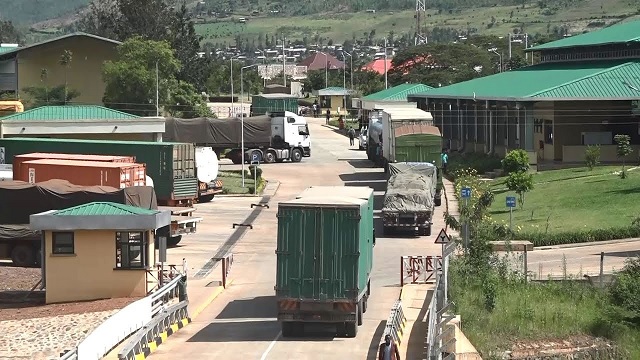
Authorities in Kabale District have heightened Ebola surveillance and tightened health safety measures at Katuna One Stop Border Post following the outbreak of Ebola in the neighbouring Democratic Republic of Congo (DRC), raising fears of possible cross-border transmission into Uganda.
The stakeholders have resolved to strengthen screening procedures and reinforce standard operating procedures at the busy border point, which serves as one of the major gateways connecting Uganda, Rwanda, and Eastern DRC.
The heightened alert follows the declaration by the World Health Organisation (WHO) of the Ebola outbreak affecting both Uganda and the Democratic Republic of Congo as a Public Health Emergency of International Concern (PHEIC).
According to Uganda’s Ministry of Health, the country has already recorded two confirmed imported Ebola cases and one death linked to the rare Bundibugyo virus strain, for which there is currently no approved vaccine or targeted treatment.
The Katuna Immigration Officer Canary Mubangizi has described the border point as highly vulnerable because of the heavy movement of travelers and traders between Uganda, Rwanda, and Eastern Congo.
“Katuna is an international border point that connects several countries in the region. We receive many travelers every day, including people coming from or passing through affected areas in Congo. That is why we cannot afford to relax,” Mubangizi said.
He noted that authorities fear some travellers from Ebola-affected areas could use the border to enter Uganda if vigilance is not intensified.
“As stakeholders, we agreed to strengthen all standard operating procedures at the border. Screening must be intensified, surveillance increased, and coordination among security and health teams improved so that we can prevent the spread of Ebola into Kabale and the rest of Uganda,” he added.
Mubangizi said immigration officials have already stepped up monitoring at entry and exit points, while health workers continue conducting temperature checks and medical screenings on travellers.
Health officials at the border also warned residents and travellers against ignoring Ebola preventive measures.
Angella Natukunda, a health facilitator stationed at Katuna border point, urged the public to remain vigilant and report any suspected Ebola symptoms immediately to nearby health facilities.
“This is a dangerous disease that spreads very fast and kills. People should not take any symptoms lightly. If someone develops signs such as fever, vomiting, diarrhoea, bleeding, or severe body weakness, they should seek medical help immediately,” Natukunda said.
She stressed that community cooperation would play a critical role in preventing the spread of the virus.
“At this time, everyone must be alert. We are asking travellers, traders, and border communities to follow all health guidelines. Wash hands regularly, avoid unnecessary physical contact, and report any suspicious cases to health authorities,” she said.
Natukunda added that early detection and rapid response remain the most effective ways of controlling Ebola outbreaks before they spread widely within communities.
“We have learned from previous outbreaks that community vigilance is very important. The public should work closely with health teams instead of hiding suspected patients,” she emphasised.
Kabale RDC Major Godfrey Katamba said many people from areas such as Butembo and other parts of Eastern Democratic Republic of Congo frequently use the Katuna border while travelling to North Kivu and neighbouring regions.
“We understand that many people from Eastern Congo use this route for business and travel. That movement itself becomes a risk during an Ebola outbreak if proper measures are not enforced,” Katamba said.
He warned that failure to tighten surveillance at border points could expose the people of Kabale and Uganda at large to a serious public health crisis.
“If we fail to act quickly and decisively, we risk allowing the disease to spread into our communities. Ebola is deadly, and prevention is the best approach,” he said.
Katamba directed security personnel deployed at both official and unofficial border crossings to increase monitoring and reduce unauthorized movements across the border.
“We have instructed security teams to strengthen vigilance at all border points, including porous routes commonly used for illegal entry. Internal movements that are not necessary should also be minimized during this period,” he said.
The RDC further called upon Ugandans to cooperate with government authorities by observing all standard operating procedures issued by the Ministry of Health.
“The public must cooperate with security and health workers. These measures are not intended to inconvenience people but to protect lives. Everyone has a responsibility to help prevent the spread of Ebola,” Katamba said.
He reassured residents that the district security committee and health teams are working around the clock to ensure all travelers entering through Katuna are screened and monitored.
“We are fully prepared and alert. Health personnel and security officers are on the ground day and night to ensure that anyone entering the country goes through proper screening,” he added.
The renewed vigilance at Katuna comes amid growing concern across East Africa over the possibility of regional spread of the Ebola outbreak due to increased cross-border trade and movement.
Authorities have since appealed to border communities, transport operators, traders, and travelers to remain calm but maintain a high level of alertness as the government intensifies preparedness and response measures.
The Ministry of Health continues to advise the public to seek immediate medical attention in case of symptoms associated with Ebola, including high fever, vomiting, diarrhoea, unexplained bleeding, severe fatigue, and muscle pain.
For now, surveillance operations at the Katuna border remain on high alert as Uganda works closely with regional and international health partners to contain the outbreak and prevent further infections.