
Job Namanya | Tayari News
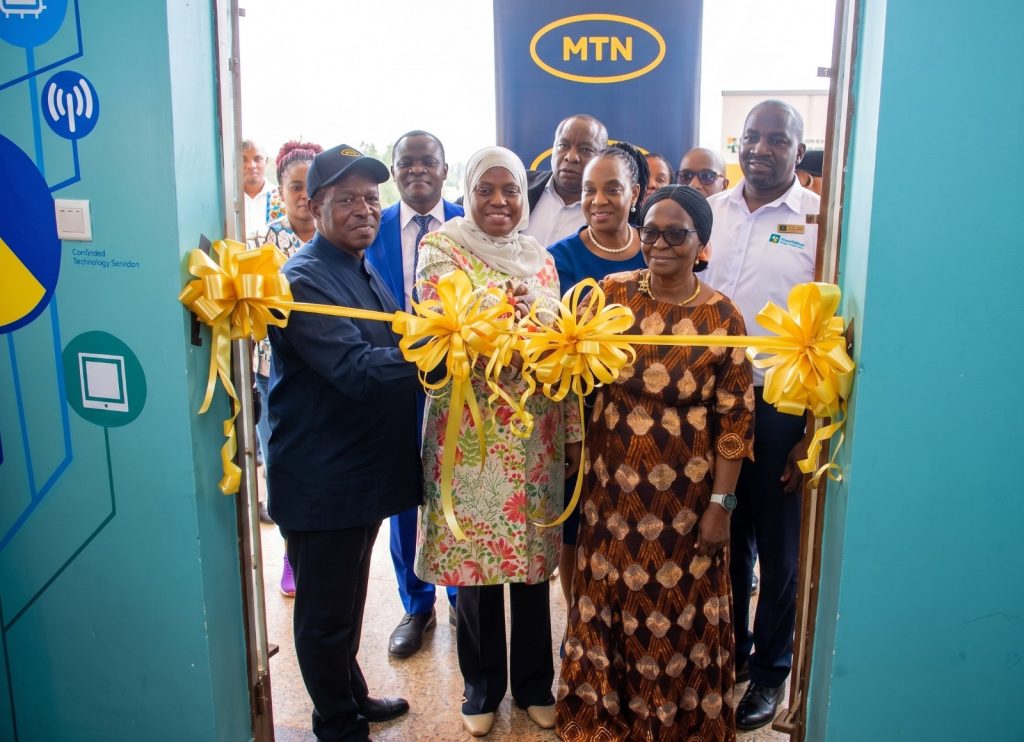
KABALE – The Government of Uganda has stepped up efforts to bridge the digital divide and empower young innovators following the launch of the MTN Spark Hub at Kabale University, a facility expected to transform innovation, skills development, and entrepreneurship in the Kigezi sub-region.
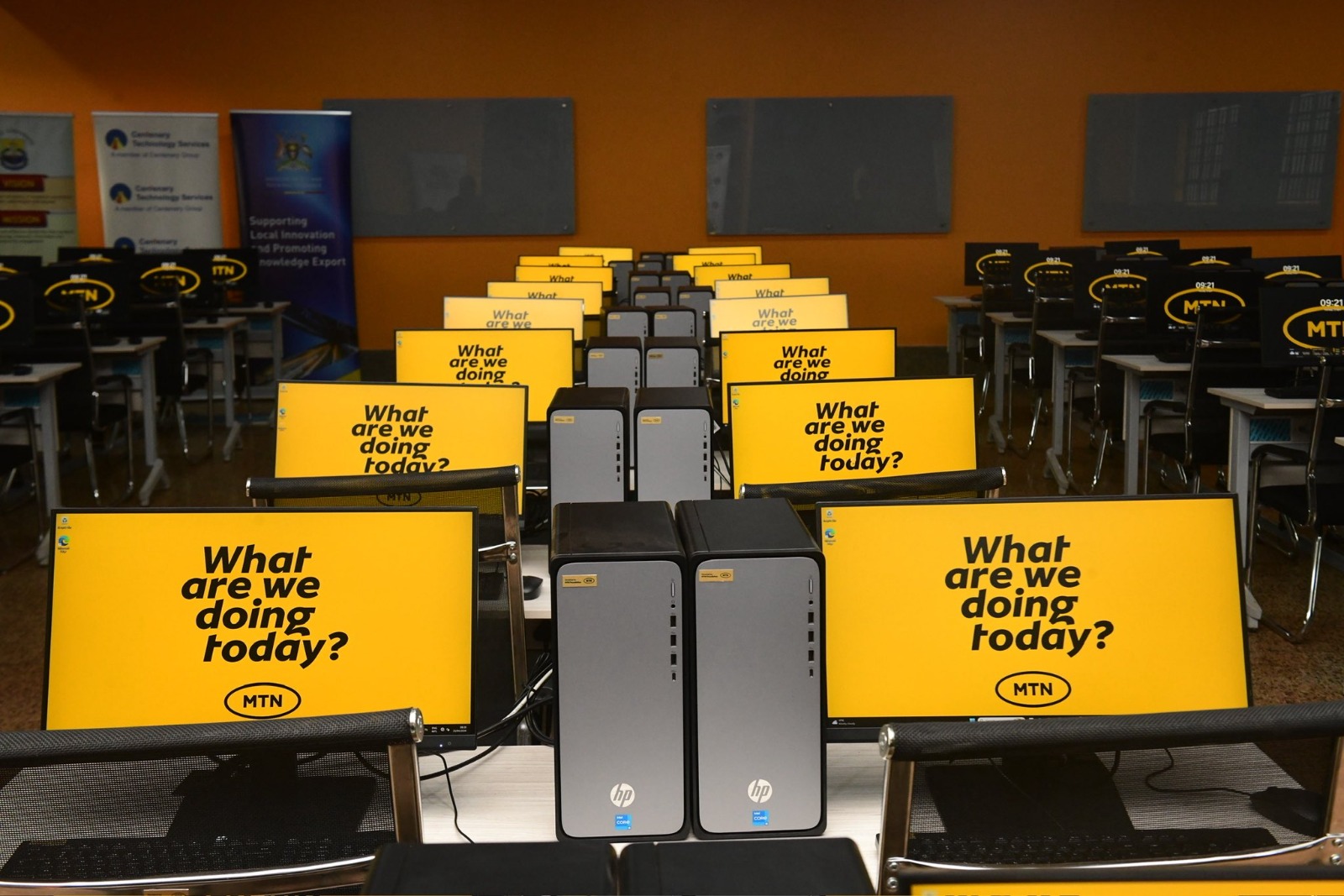
The hub, established through a partnership between the Ministry of Information, Communication and Technology (ICT) and National Guidance and MTN Foundation, is equipped with 80 computers, free internet access, and a range of digital training programs designed to equip youth with practical skills for the modern economy.
Speaking at the launch, the Vice Chancellor of Kabale University, Prof. Joy Kwesiga, described the facility as a timely intervention that will strengthen the university’s mandate of teaching, research, and community engagement. She emphasized the institution’s commitment to safeguarding and sustaining the hub.
“We are going to look after this hub. We are going to see what we can add in for ourselves but we shall also be able to protect it as you help us,” Prof. Kwesiga said, noting that both surveillance systems and human security would be deployed to ensure the safety of the equipment.
Prof. Kwesiga highlighted key benefits expected from the hub, including entrepreneurship development, digital skills training, research and innovation, and financial inclusion, particularly for a rural-based institution like Kabale University.
“Financial inclusion means that now we have a chance. The services are nearer to us because we have this issue of a gap as a rural-based institution and region,” she noted.
She further appealed to MTN Foundation to support the university’s annual training programs for school-leavers, citing limited access to computers in many schools.
Mable Kayima, a programs officer at Centenary Technologies, the company that facilitated the technical implementation of the hub urged innovators to look beyond the classroom and focus on the unique needs of the Kigezi sub-region.
“This hub is a bridge between technology and the real-world challenges faced by our people. We are challenging innovators to use this space to develop homegrown solutions that address the day-to-day livelihood struggles within Kigezi communities, whether in agriculture, trade, or service delivery. Our goal is to see technology that does not just sit in a lab, but actually transforms lives on the ground,” Kayima stated.
On his part, Prof. William Bazeyo, a trustee at the MTN Foundation, underscored the importance of innovation hubs in enhancing Uganda’s global competitiveness in ICT.
“Our ICT and digital transformation has improved so that globally we are now recognized,” he said.
He revealed that MTN Foundation has invested approximately Shs4 billion in similar initiatives over the past three years, targeting to impact at least 20,000 youth across the country. He also highlighted the role of Business Process Outsourcing (BPO) in connecting skilled youth to job opportunities.
Permanent Secretary in the Ministry of ICT and National Guidance, Dr. Aminah Zawedde, emphasized collaboration and continuous learning as key to maximizing the benefits of the hub.
“The world does not work with individuals working alone. It works with partners and collaboration,” she said, urging students to take advantage of online learning platforms to acquire marketable skills such as data analytics and artificial intelligence.
“A student can take a course online and gain skills in areas like data analytics. We want you to identify the most marketable professions,” she added.
Dr. Zawedde noted that the establishment of innovation hubs is part of a broader government strategy to tackle youth unemployment and foster socio-economic transformation, with a target of creating up to 150,000 jobs by 2030 through initiatives like BPO.
“You can sit in Uganda and work for Europe, for the US, or anywhere in the world. You do not have to move if technology is working for you,” she said.
Students and local innovators welcomed the facility, describing it as a game changer for the region.
Evelyne Kyomugisha, a student at Kabale University, said the hub would address one of the biggest challenges faced by learners—limited access to digital resources.
“Many of us have been struggling to access computers and reliable internet for research and coursework. This hub is going to make learning easier and also help us gain practical digital skills that are needed in the job market,” she said.
She added that the availability of free internet and structured training programs would enable students to explore online courses and certifications, improving their competitiveness after graduation.
“For me, I want to enroll in online courses and improve my skills in digital communication and data analysis. This is an opportunity I cannot take for granted,” Kyomugisha noted.
Moses Mucunguzi, a local innovator in Kabale, said the hub would provide a much-needed platform for young innovators to develop and test their ideas.
“As innovators, we have ideas but we lack the space, tools, and internet to bring them to life. This hub is going to bridge that gap,” he said.
He added that the collaborative environment would enable innovators to network, share knowledge, and attract potential partners.
“This is not just about computers, it is about creating a community of thinkers and problem-solvers. We can now sit together, work on ideas, and even pitch them to potential investors or partners,” Mucunguzi explained.
The facility is part of a wider national rollout targeting more than 44 communities across Uganda, aimed at empowering youth with digital skills and fostering inclusive development through technology.