
Job Namanya | Tayari News
RUKIGA – The family of Sarah Ayebare, who was shot dead alongside her child in a prison shooting in Kiboga District, has called for mandatory routine mental health examinations for armed security personnel, saying the tragedy exposes deep cracks in the psychological welfare systems of men and women in uniform.
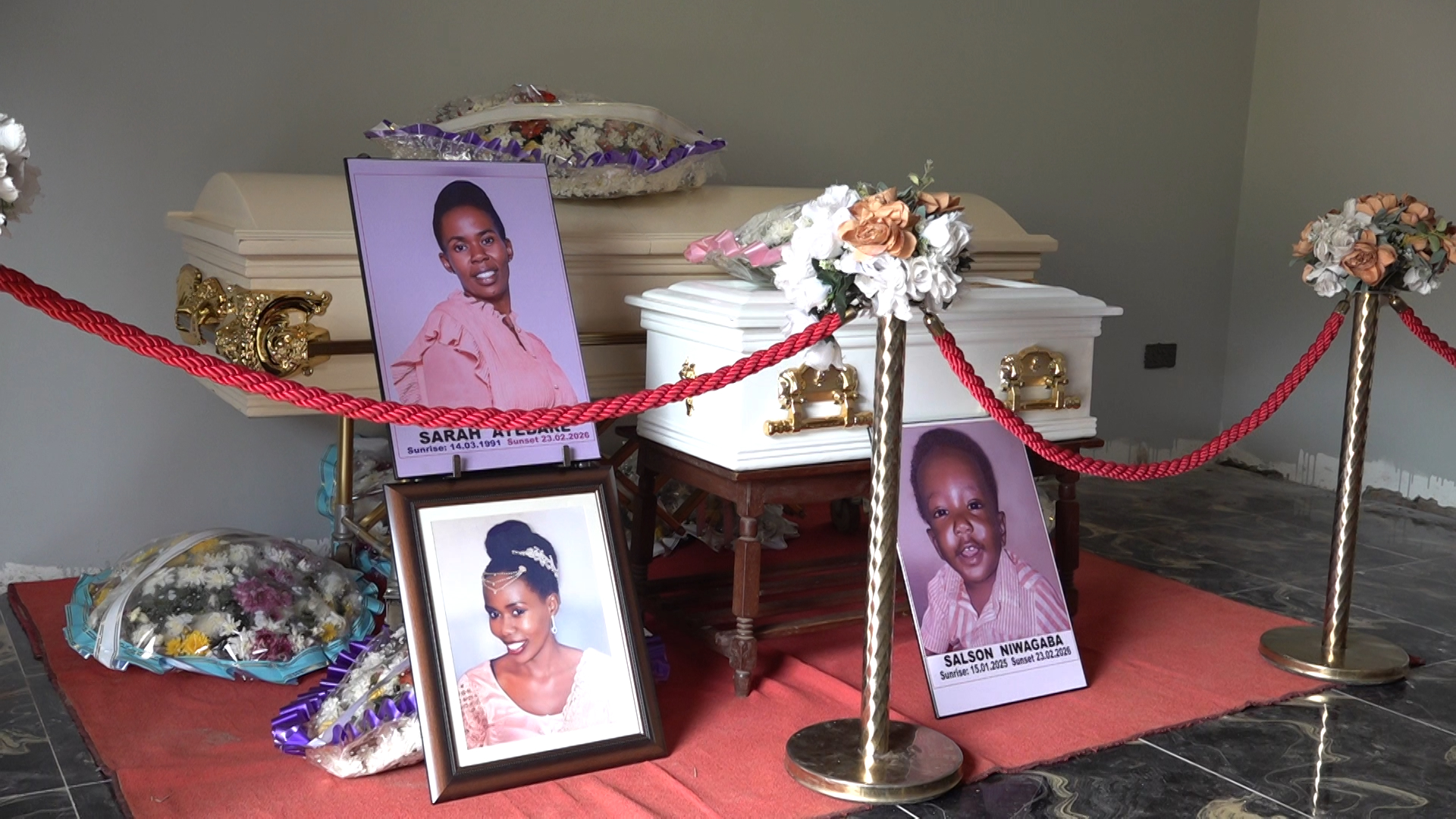
Ayebare and her young child, Salson Niwagaba, were killed on Monday in a shocking shooting incident at Kiboga Government Prison.
The shooting, allegedly carried out by a prison warder who reportedly went rogue, also claimed the lives of two fellow warders, Hope Catherine and Bright Akishuri. The suspect, identified as Moses Anguyo, remains on the run as security agencies intensify a manhunt.
What began as an ordinary day within the prison facility quickly descended into chaos, leaving families shattered and the nation once again confronting difficult questions about the mental stability of armed officers entrusted with public safety.
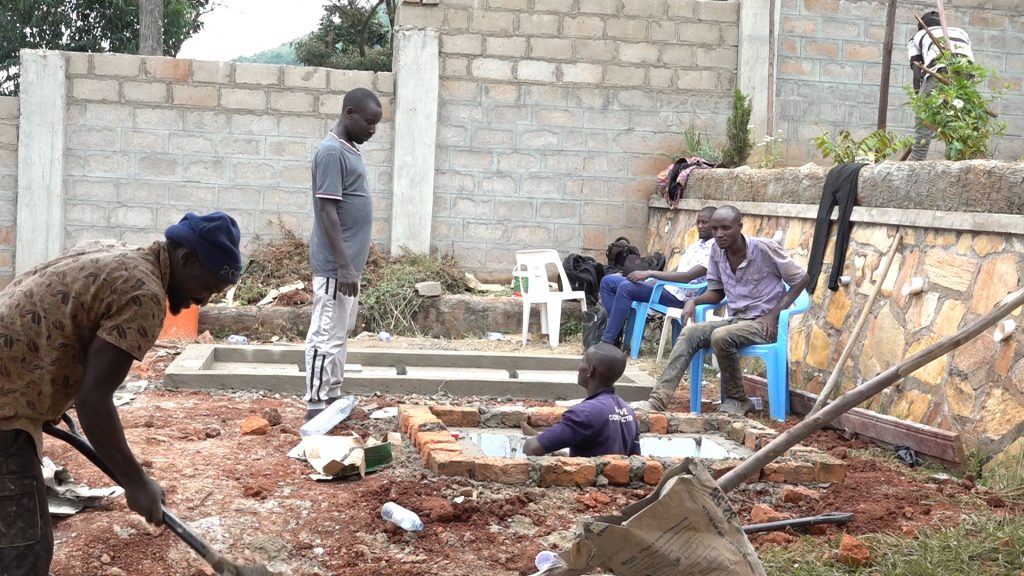
When this reporter visited Omunkole Village in Rukiga District, the air was heavy with grief. In Omunkole Village, located in Rwenyangye Parish within Kamwezi Sub-county, mourners gathered at the ancestral home where burial preparations were underway.
The quiet hills of Rukiga District contrasted painfully with the violent manner in which lives had been cut short hundreds of kilometres away.
Women sat in small groups, whispering prayers and words of disbelief. Men stood in clusters beneath trees, their voices low and heavy with shock. Children moved about confused, sensing the gravity of the moment but unable to fully comprehend it.
Inside the family compound, relatives described Ayebare as a pillar of strength whose sudden death has left a vacuum that will be difficult to fill.
Godfrey Birungi, the father-in-law of the deceased, struggled to contain his emotions as he spoke about the tragedy. He said the news of the shooting reached them like a thunderbolt, shattering the calm of their rural home.
“We never imagined that someone entrusted with a gun to protect lives would turn it against fellow officers and innocent people. This raises serious questions about the mental health of those we give weapons,” Birungi said.
Birungi warned that such incidents risk dragging Uganda back to painful chapters of its past periods marked by instability and fear, when gun violence was more commonplace.
“We have worked so hard as a country to build peace and stability. If officers who are supposed to guard us begin to lose control like this, then we must urgently look into what is happening within our security institutions,” he added.
According to family members, Ayebare was more than a wife and mother; she was the backbone of the household.
Annah Birungi, her mother-in-law, described her as hardworking, respectful and deeply committed to the well-being of her extended family.
“She took care of everyone. Even when my husband fell sick with diabetes, she ensured he got his medication and meals on time. She treated him like her own father,” Annah said through tears.
Annah recalled how Sarah balanced family responsibilities with her own aspirations, always determined to improve the welfare of her home. She spoke of a woman who rose early, worked diligently, and remained optimistic about the future despite the challenges that come with being married into a security family.
“She was supportive and development-minded. She encouraged savings and small projects at home. We had plans. Now everything has stopped,” Annah added.
The loss of Sarah’s young child has compounded the pain. Relatives say it is particularly heartbreaking that an innocent life was caught up in what appears to have been an internal security crisis.
Community members expressed anger and confusion about how a warder could open fire on colleagues and civilians within a controlled facility.
Samuel Mukuru, a brother of the deceased, said the tragedy should serve as a wake-up call for authorities to institute mandatory psychological screening and continuous mental health monitoring for security personnel.
“Carrying a gun is not just about physical fitness. It requires emotional stability and mental clarity. If someone is struggling psychologically, the consequences can be deadly,” Mukuru said.
Mukuru suggested that periodic counselling sessions, confidential mental health reporting channels, and structured stress management programs could help prevent similar incidents.
“Our officers go through trauma, riots, confrontations, long hours, and separation from families. If we do not help them process these experiences, we are sitting on a time bomb,” he warned.
Security analysts have long argued that the stigma surrounding mental health in uniformed services often prevents officers from seeking help. Fear of being labelled weak or unfit for duty can drive individuals to suppress emotional struggles until they manifest dangerously.
The Kiboga shooting has reignited debate about whether existing support systems within security institutions are sufficient.
As the search for the suspect continues, attention has also turned to the broader institutional response. Community members in Rukiga say justice must be served, but they equally want preventive measures that protect other families from similar heartbreak.
Back in Omunkole Village, preparations for burial continued with a solemn rhythm. Relatives erected tents, prepared food for mourners, and coordinated with local leaders for the final rites. The mood remained subdued, punctuated only by occasional wails from close family members overcome by grief.
Local leaders who visited the family condoled with them and urged calm as investigations proceed. They emphasised that while the tragedy occurred far from Rukiga, its impact is deeply felt across the region because of the strong communal ties that bind families together.
For many residents, the incident has stirred anxiety about safety within security installations themselves. If a prison, a place designed for control and discipline, can become the scene of such violence, some wonder what safeguards are in place elsewhere.
Yet amid the sorrow, there were also calls for unity and resilience. Elders reminded mourners that while the loss is devastating, the community must support the bereaved family in rebuilding their lives.
Ayebare and her child will be laid to rest at their ancestral home in Omunkole Village, where generations before them have been buried. The burial is expected to draw mourners from across Rukiga and beyond, including colleagues and representatives from the prisons service.
As the family prepares to say their final goodbyes, their appeal remains clear: that this tragedy should not fade into statistics or routine headlines.
They want meaningful reforms, structured psychological evaluations before recruitment, periodic mental health reviews during service, and accessible counselling for officers experiencing stress.
For Birungi and his family, no reform can bring back their loved ones. But they hope that by speaking out, they can prevent another family from enduring the same anguish.
“This pain is too much. If there is anything good that can come from this, let it be change,” Birungi said quietly, looking toward the hills where his daughter-in-law will soon be laid to rest.
As Uganda reflects on the events in Kiboga, the conversation around mental health within the security forces has taken on new urgency, a reminder that safeguarding the nation also requires safeguarding those who bear arms in its name.