
Tayari News
At least 30 parliamentary election petitions have been filed following Uganda’s January 15, 2026, general elections, highlighting ongoing disputes over declared outcomes.
The cases, now before various High Court circuits, involve challenges against winning candidates, election procedures, and the conduct of Electoral Commission officials.
Key petitions have been lodged in Masaka, Soroti, Moroto, Luwero, Mbarara, Iganga, Kumi, Pader, Tororo, Fort Portal, Hoima, Mukono, and Lira.
According to an Electoral Commission status report dated March 25, 2026, which Uganda Radio Network has seen, the petitions involve a mix of candidates challenging declared winners, and the Commission is named as a respondent in all cases before the Courts.
“The High Court of Uganda at Soroti, Moroto, Masaka, Luwero, Mbarara, Iganga, Kumi, Pader, Tororo, Fort Portal, Hoima, Mukono, and Lira is handling multiple petitions filed under various election petition numbers in 2026,” the report indicates.
Among the notable cases are a petition by Musician turned Politician, Hillary Innocent Kiyaga, commonly known as Dr. Hilderman of the opposition National Unity Platform (NUP).
Dr. Hilderman, who is the incumbent MP for Mawokota North, is challenging the victory of Former Minister for Trade and Cooperatives Amelia Kyambadde together with the Electoral Commission.
In western Uganda, incumbent MP Mwesigwa Robert Rukaari has filed a petition against businessman cum politician Christopher Bakashaba and the Electoral Commission at the High Court in Mbarara.
In Eastern Uganda, incumbent MP Sarah Opendi Achieng is contesting the election of Angella Akoth, with the Electoral Commission also listed as a respondent in the petition before the High Court in Tororo.
Similarly, Birungi Kobusingye has petitioned against NUP’s Harriet Nakwedde and the Electoral Commission in a case filed at the High Court in Mukono over the Kayunga District Woman MP results.
In the Masaka High Court Circuit, Rose Nalubowa is challenging the victory of NRM’s Justine Nameere as the City Woman MP, while Muwonge Nkoko is challenging the victory of incumbent Lwengo District Woman MP Cissy Namujju Dionizia, with the Electoral Commission named as a co-respondent, in one of several petitions contributing to Masaka’s high caseload.
Ruth Katushabe’s victory as Bukomansimbi District Woman MP is also being challenged by Grace Nalubega, and Mary Begumisa, the incumbent Ssembabule District Woman MP, is challenging the victory of Florence Nambazira.
Others include the victory of State Minister Esther Davinia Anyakun, which is being challenged in the Moroto High Court by Lilly Lapowa.
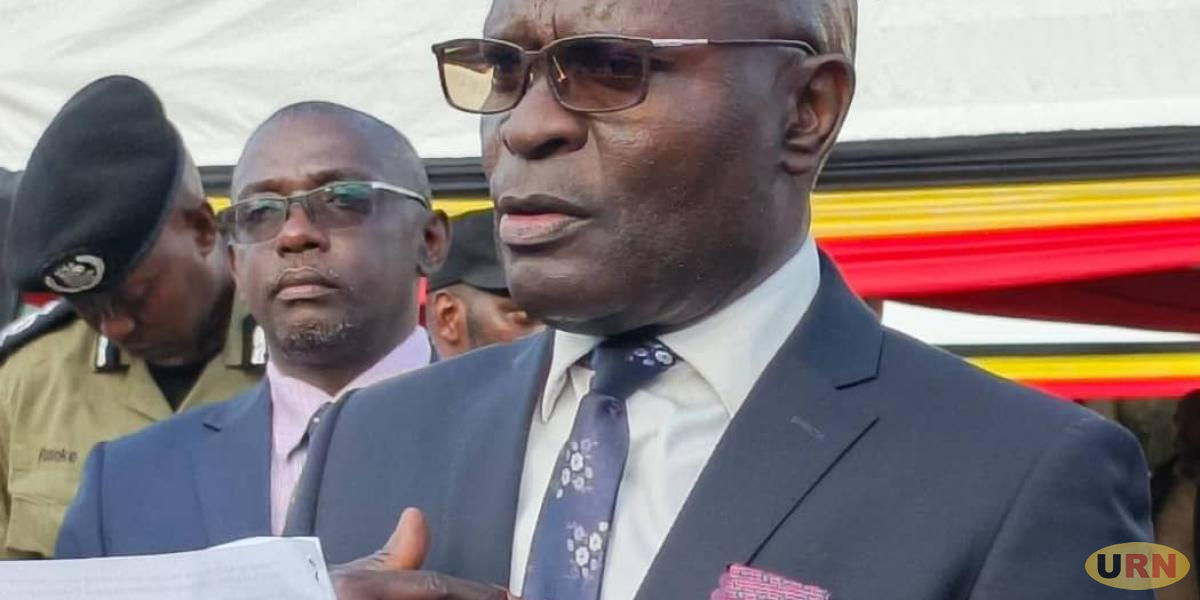
While commenting on the developments, the Electoral Commission’s in charge of litigation, Eric Sabiiti, said the number of petitions remains relatively modest compared to previous election cycles.
“We have so far received 30 election petitions, and 24 of these are from candidates challenging the victories of Women Representatives to Parliament,” he said.
Sabiiti explained that the bulk of the petitions stems from the earlier gazettement of Women Representatives.
“The women were gazetted earlier than the directly elected Members of Parliament, and petitions are filed within 30 days after gazettement. That window has now closed for the Women Representatives,” he noted.
He added that candidates in the directly elected MP category still have time to file petitions. “For directly elected Members of Parliament who were gazetted on March 2, the window will close on April 2,” said Sabiiti.
According to Sabiiti, the Electoral Commission is also in the process of gazetting other categories for local government positions.
On why the number of petitions appears low, Sabiiti attributed it to the conduct of the elections. He said the process was largely free and fair, leaving few grounds for successful legal challenges.
A source who declined to be quoted because of his position in the Justice system said he held a different view from that of Sabiiti, attributing the fewer cases to declining public confidence in the judiciary.
The source said some candidates may be reluctant to pursue petitions due to perceptions about how electoral disputes are resolved by the Courts of Judicature. The report lists numerous petitioners contesting results against declared candidates and, in some cases, returning officers.
Several constituencies have attracted more than one petition, which shows closely contested races and lingering dissatisfaction with the general outcomes.
Masaka and Moroto High Court Circuits are handling a significant portion of these cases, with Iganga and Lira also managing multiple petitions against both candidates and election officials.
Key issues raised in the petitions include alleged electoral malpractice, disputes over vote tallying, questions surrounding candidate nomination processes, and accusations of irregularities involving returning officers.
Under the Parliamentary Elections Act, the High Court is required to determine parliamentary election petitions within strict timelines, in any case, 30 days once all parties have put in their responses to the matter.
Most of the petitioners in these cases are seeking by-elections in their respective Constituencies, while others are seeking the nullification of the declared victories so that they can be substituted as the winners.
Asked when the Judiciary will start hearing these cases, the Judiciary Public Relations Officer, James Jumire Ereemye Mawanda, said the Principal Judge Jane Frances Abodo will give guidance to the courts after the close of the pleading period, which he believes ends this week.
Following the general elections of 2021, the Judiciary registered 160 petitions at the Parliamentary and local Council levels. 102 were filed against Members of Parliament, while 49 were against Local Council Chairpersons, and nine were election applications.
These cases were handled expeditiously by 32 Judges according to the records before the Judiciary.
-URN-