
Gideon Tumwikukye | Tayari News
KABALE – The Financial Intelligence Authority has warned managers of Savings and Credit Cooperative Organizations (SACCOs) in Kabale District to remain vigilant when dealing with individuals who deposit unusually large sums of money, cautioning that some of the transactions could be linked to money laundering.
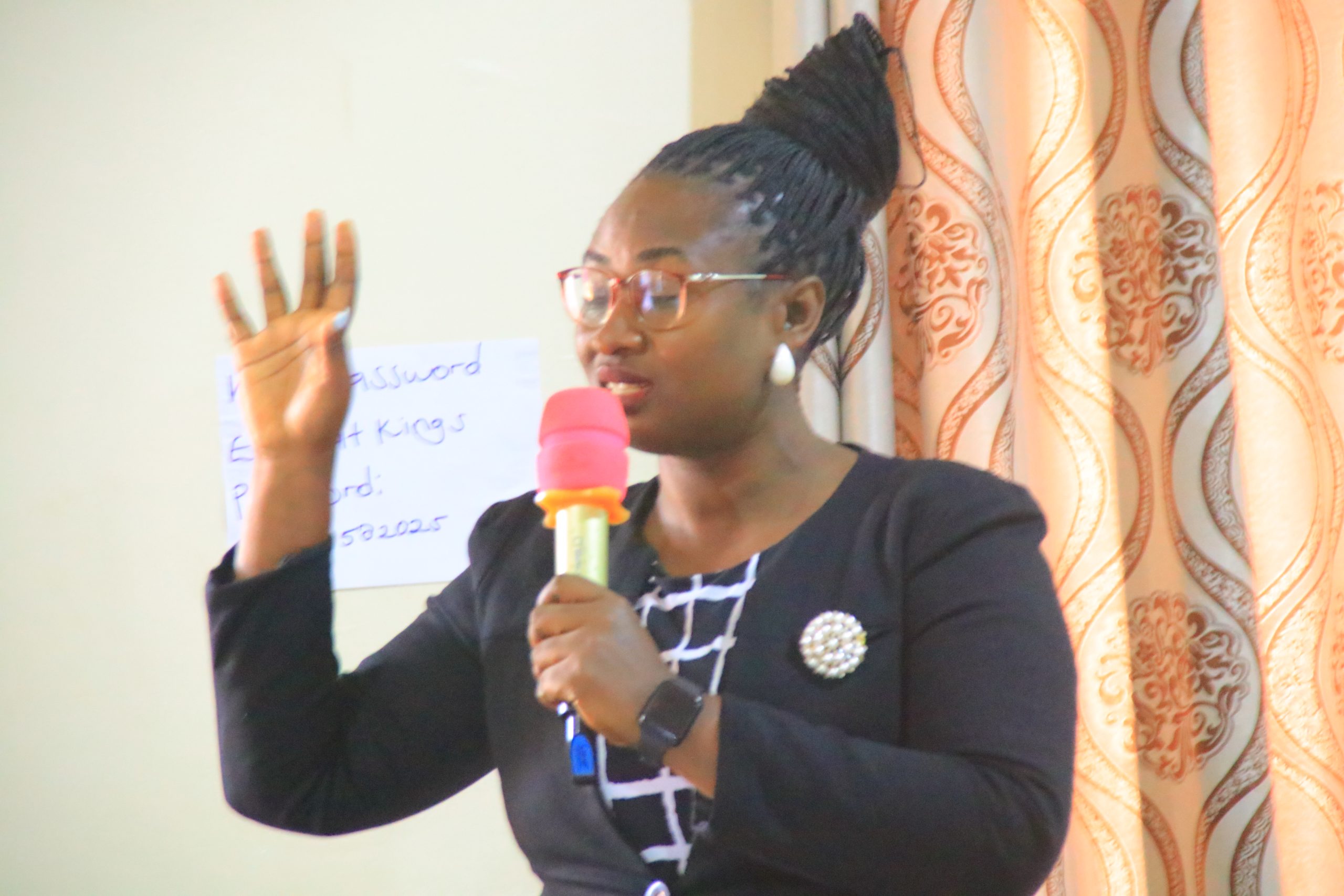
The warning was issued by Monic Ndyamuhimbisa, the Principal Compliance and Outreach Officer at the Financial Intelligence Authority, during a half-day workshop for journalists in Kabale on Thursday.
The training aimed at strengthening the capacity of media practitioners to monitor financial transactions and support authorities in tracking illegal money, corruption, and terrorism financing in Uganda.
Ndyamuhimbisa explained that individuals involved in money laundering often avoid depositing large sums of money in commercial banks because they fear strict scrutiny and questions about the source of their funds.
“Many people involved in money laundering fear depositing large amounts of money in banks because they know they will be asked to explain where the money came from. Instead, they open accounts in SACCOs where they believe the scrutiny is lower,” Ndyamuhimbisa said.
She noted that in some cases, SACCO managers do not thoroughly investigate the source of funds or the nature of a depositor’s business once an account has been opened.
“Some SACCO managers do not take time to inquire about the source of the funds or the business activities of the depositor. As a result, some SACCOs end up holding large sums of money simply because members keep depositing substantial amounts,” she added.
According to Ndyamuhimbisa, while most SACCO members are farmers or small business operators, it becomes suspicious when individuals deposit unusually large amounts of money without a clear explanation of their income sources.
“When someone who is known as a farmer or a small trader begins depositing very large amounts of money that do not match their known income activities, that should raise concern and prompt further inquiry,” she explained.
She further warned that criminals are increasingly turning to SACCOs as alternative channels for depositing illegally obtained money.
“Criminals are now using SACCOs to deposit money obtained through illegal activities because they fear the strict regulations and questioning often imposed by commercial banks,” she said.
Meanwhile, Jossy Muhangi, the spokesperson for the Financial Intelligence Authority, said money laundering creates unfair competition in the business community, disadvantageous to entrepreneurs who operate legitimately.
“Money laundering brings unhealthy competition in the business community because people who obtained money illegally can easily outcompete genuine business people who follow the right procedures,” Muhangi said.
He added that Uganda loses significant amounts of money to money laundering every year, funds that could otherwise support government programs and improve service delivery.
Speaking at the same event, the Kabale District Deputy Resident District Commissioner, Micheal Muramira Kyakashari, called on the public to remain vigilant and report individuals suspected of engaging in money laundering activities.
“When large amounts of unexplained money circulate in a town, it can lead to economic instability and even inflation, which eventually affects the cost of goods and services for ordinary citizens,” Kyakashari said.
He urged residents to be cautious about individuals who suddenly appear in the area with large sums of money and unclear business activities.
“People should be careful about individuals who come to Kabale with large amounts of money but without clear businesses. Such cases could be linked to financial crimes,” he warned.
Kyakashari also tasked journalists with raising public awareness about the dangers of money laundering, noting that the media plays a key role in educating communities.
“The media has a critical responsibility to inform the public about the dangers of money laundering and how financial crimes affect development and the local economy,” he added.