
Enock Ndyamuhakyi | Tayari News
Residents of Kabale Municipality have appealed to the Government of Uganda to strengthen support for girl children during their menstrual cycles in a bid to reduce school dropouts and improve the welfare of girls, especially those from vulnerable families.
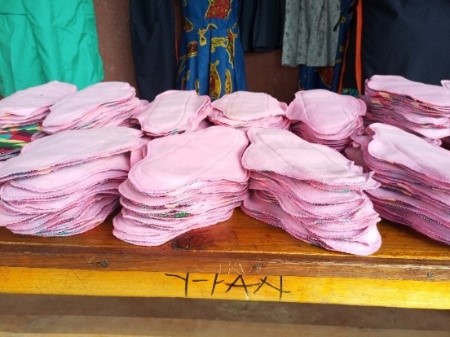
The appeal was made as the world commemorated Menstrual Hygiene Day, observed annually on May 28 to raise awareness about the importance of menstrual health and hygiene. This year’s global campaign is themed “#PeriodFriendlyWorld,” emphasising the need to break menstrual stigma, improve access to sanitary products, and ensure safe and dignified sanitation facilities for all menstruating girls and women.
Speaking to our reporter, Jane Elizabeth Umutangana, a resident of Kabale Municipality, expressed concern over the increasing number of school-going girls missing classes due to lack of sanitary pads. She noted that many parents, particularly those in low-income families and rural communities, cannot afford to buy sanitary towels for their daughters, forcing some girls to stay home during their menstrual periods.
“Many girls fail to attend classes during their menstrual periods because they do not have sanitary pads. Some parents are struggling to provide food and school fees, making sanitary towels unaffordable,” Umutangana said.
She explained that the situation has negatively affected the education and confidence of many girls, with some eventually dropping out of school altogether due to repeated absenteeism and stigma associated with menstruation.
“A girl child cannot concentrate in class when she is worried about her menstrual situation. Some girls end up feeling ashamed and isolated, which affects their academic performance,” she added.
Umutangana called upon the government to include sanitary pads among the essential materials supplied to schools, especially government schools and institutions in remote villages where poverty levels remain high.
“Government already supplies books and other educational materials to schools, so sanitary pads should also be considered as essential materials for girl children. If schools can receive textbooks, they should also receive sanitary towels,” she emphasized.
According to her, providing free sanitary pads in schools would greatly improve menstrual hygiene among girls and help keep them in school throughout the academic term.
Meanwhile, Lukia Nantaba, a female journalist based in Kabale District, urged the government through the Ministry of Health to establish regional sanitary pad manufacturing factories to produce affordable sanitary products for vulnerable communities.
Nantaba argued that locally manufactured sanitary pads would reduce costs and increase accessibility for parents who struggle to afford commercially produced products.
“If government establishes regional pad factories, sanitary towels will become cheaper and more accessible to ordinary Ugandans. Many families cannot afford the expensive products sold in shops,” Nantaba said.
She added that menstrual health remains a sensitive but important issue that requires urgent attention from all stakeholders.
“Menstruation is a natural process, but many girls still suffer in silence because society treats the issue as a taboo. We need open discussions and proper education,” she explained.
Nantaba further emphasized the need for comprehensive menstrual education for young girls, noting that many children enter puberty without proper knowledge about menstruation and personal hygiene due to limited sensitization both at home and in schools.
“Some girls get frightened during their first menstrual period because nobody prepared them. Others use unsafe materials because they do not know the importance of proper menstrual hygiene,” she said.
According to Nantaba, lack of information exposes girls to fear, shame, infections, and misinformation during their first menstrual experiences.
“There should be continuous awareness campaigns in schools and communities to help girls understand menstruation and how to manage it safely and confidently,” she added.
Another resident, Doreen Tindimweba, called on the government and development partners to intensify awareness campaigns aimed at fighting menstrual stigma and discrimination against girls.
Tindimweba said many girls continue to face embarrassment and isolation during menstruation due to negative cultural beliefs and inadequate guidance from adults.
“In some communities, menstruation is treated as something shameful, and this affects the confidence of young girls. Girls need support and encouragement instead of discrimination,” she said.
She stressed that parents, teachers, and school administrators should work together to create a supportive environment where girls can freely discuss menstrual health issues without fear or shame.
“Parents should stop avoiding conversations about menstruation with their daughters. Girls need guidance both at home and at school,” Tindimweba noted.
She also observed that some senior women teachers have failed to fully support girls in schools despite being expected to guide them on reproductive health matters.
“Senior women teachers should become closer to the learners and help them understand how to maintain hygiene during menstruation. Girls should feel safe seeking advice from teachers,” she explained.
Tindimweba added that proper menstrual hygiene education would help girls remain confident and focused on their studies.
“If girls are supported and educated properly, they will not miss classes because of menstruation. This will improve their education and future opportunities,” she said.
Former Kabale District Woman Member of Parliament aspirant, Hon. Grace Ankunda Bekunda Bwesigye, also joined the call, urging the government to provide free sanitary materials to all school-going girls across the country.
Bwesigye said that just as the government introduced Universal Primary Education (UPE) and Universal Secondary Education (USE) to improve access to education, it should also ensure that sanitary towels are provided in schools to support the health and dignity of girl learners.
“Education is a right, and girls should not be forced to stay home simply because they lack sanitary pads. Government must take menstrual hygiene seriously,” Bwesigye said.
She observed that some girls are exposed to risky relationships and early pregnancies due to lack of sanitary materials and inadequate knowledge about menstrual hygiene.
“Some vulnerable girls end up depending on men to provide money for sanitary towels, and this exposes them to sexual exploitation and early pregnancies,” she noted.
According to Bwesigye, the government should strengthen school health programs and ensure that menstrual hygiene management is prioritized in all schools.
“Providing sanitary towels in schools is not a luxury but a necessity. Supporting girls during menstruation will help them stay in school, protect their dignity, and improve their future,” she emphasized.
She further appealed to civil society organizations, religious leaders, teachers, and parents to join hands in supporting adolescent girls.
“This is not a responsibility for government alone. Communities, schools, and families must work together to ensure that girls grow up healthy, confident, and educated,” Bwesigye added.
As Uganda joins the rest of the world in commemorating Menstrual Hygiene Day, stakeholders continue to call for collective action to ensure that no girl misses school or loses opportunities because of menstruation.
Advocates say increased access to affordable sanitary products, improved sanitation facilities, proper menstrual education, and elimination of stigma are key steps toward promoting gender equality and improving the wellbeing of girls and women across the country.