
Today, 28 May 2026, is World Menstrual Hygiene Day under the theme “Period Friendly World”, bringing together governments, United Nations agencies, civil society organisations, researchers and communities to promote menstrual health and hygiene.
Have you at some point seen a woman being abused or laughed at because they have menstruated? Back in my lower primary, a classmate, Kabuuza (not real name), menstruated on our locally-made papyrus carpet (ekirago) and we laughed at her. We were like ‘Kabuuza yaaza omu kwezi, yateera maapu, ‘ meaning, ‘Kabuuza has menstruated and drawn up a map.’ Well, we had not yet been sensitized on what it meant for someone to menstruate and how it came about.
So, to us, seeing blood was an abomination. Some colleagues said Kabuuza had a wound, and that’s why blood was coming out. It was not until around primary four that I was told that younger girls and women experience menstrual periods. I still kept looking at girls and women who experience menstruation as dirty and careless people for some years. I actually made full sense of menstruation after joining secondary school, and I can now advocate for safe menstruation.
In communities, people, including our sisters, wives and mothers, feel shy talking about menstruation, and millions of people across the world acknowledge that this happens because of the stigma that the world has built around a woman being in her menstrual cycle, and yet it is a healthy experience. To explain this more, it is unhealthy when a female does not see her period. Some people seek medical attention after missing their cycles.
On this menstrual hygiene day, it is our role to join other people and raise awareness of the challenges many women and girls face in managing menstruation safely and with dignity. Talking about menstruation encourages action to address stigma, improve access to menstrual products and information, and strengthen water, sanitation and hygiene services.
Going through periods is a mix of physical and emotional changes. Physical hardships include abdominal cramps, bloating and breast tenderness, fatigue, and digestive changes, while emotional changes include mood swings, lack of sleep, and others. It is important that all of us give a thought to these experiences and, where possible, extend a hand of support to a woman.
Menstrual hygiene has been placed in the global health, education, human rights and gender equality by activists from different parts of the world, especially the global south, due to reports of women and girls experiencing shame and embarrassment and the challenges that they go through when managing their periods.
Several females who undergo periods lack the means by which they can manage their cycle with dignity, and this makes them miss out on education, work, and the freedom of association.
Due to prohibitive costs, girls and women, especially in rural areas, resort to using pieces of cloth as alternatives. Rural women and girls resort to used pieces of cloth for padding; 52% used disposable pads, 32% used pieces of cloth, 6% used reusable pads, 5% used cotton wool, 3% used toilet paper, while 2% used other materials.
The Ministry of Education Menstrual Hygiene Management study 2020 found that 1 in 10 school-age African girls skip school during menstruation or drop out entirely because they lack access to necessary sanitary products.
There are efforts on the ground. Several players, including individuals, local organisations, governments, and global stage organisations, have done good work in spreading awareness and empowering societies to freely speak about menstruation.
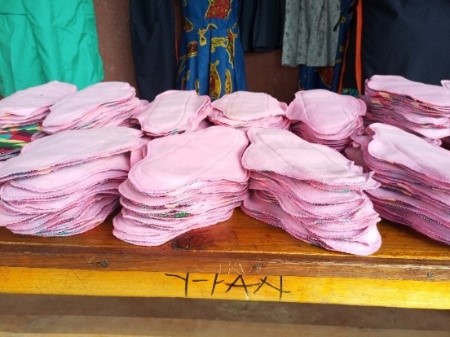
Youth Focused Achievers Network (Y-FAN), a community-based organisation in Rukiga District, established to educate and mobilize communities on the need to empower girls through education, access to Sexual Reproductive Health information and services, as well as addressing gender-based violence, with support from the Uganda Industrial Research Institute and other partners, makes and supplies hygiene and dignity kits, commonly known as sanitary pads. These hygiene kits have already been supplied to people who were devastated by floods in Kasese districts, some schools in Uganda, Ethiopia and Kenya. This initiative has contributed to ensuring that the dignity of women and girls is respected as per the UN declaration on Menstrual Hygiene Management.
In the move to put an end to menstrual stigma among girls in rural schools, Raising Teenagers Uganda, a non-governmental organisation that empowers teenage girls to stay in school until they complete their education, has, over the years, supported girls with sanitary pads and knickers so that they don’t miss school. Raising Teenagers Uganda team leader, Hope Nankunda, says menstruation is a normal and natural process that every girl and woman must go through, and so it should not be referred to as dirty by using words that undermine it.
Talking about menstruation is okay and raising awareness around it matters because this provides accurate information, encourages clear and respectful communication, improves access to essential hygiene products and reduces the stigma.
Therefore, World Menstrual Hygiene Day should call us to start and normalise conversations on menstruation and discussions that tell people that to menstruate is natural and healthy. Let us advocate for a world where menstruation is openly discussed, supported and respected, and menstruators can manage their periods safely and confidently.
Zadock Amanyisa – Online Editor at Tayari Media
Phone: 0782711457/0706139795 |Email:zadock.amanyisa@gmail.com