
Job Namanya | Tayari News
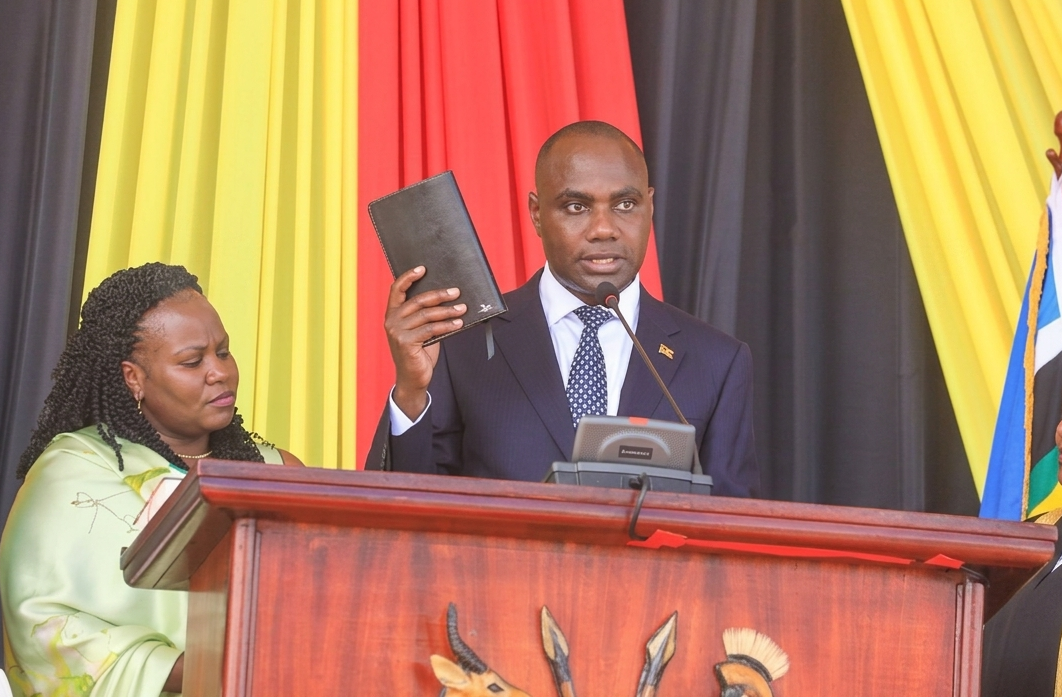
State Minister for Finance and Economic Planning Henry Musasizi has pledged to intensify efforts aimed at improving household incomes and fighting poverty in Rubanda East after taking oath as Member of Parliament for the 2026–2031 term.
Speaking shortly after the swearing-in ceremony, Musasizi said he was humbled by the confidence and trust voters had placed in him, promising to continue serving the constituency with dedication and commitment.
“I want to express my heartfelt gratitude to the people of Rubanda County East for trusting me with this great responsibility. Your support, prayers and votes mean the world to me, and I promise to work tirelessly to serve you and uplift our community,” Musasizi said.
Musasizi, who has represented the constituency in Parliament since 2011, said the new term would largely focus on improving livelihoods, especially among rural households that still depend on subsistence farming for survival.
He noted that although significant progress had been registered in socio-economic transformation programmes such as the Parish Development Model (PDM), a large section of the population in Rubanda District remained outside the money economy.
The minister observed that about 35 percent of households in the district were still “working for the stomach,” an expression commonly used to describe families that only produce enough food for daily survival without surplus income.
He said his leadership in the next five years would focus on expanding income-generating opportunities and strengthening government interventions intended to transform rural communities economically.
“Now in the new term, we shall build on the achievements so far achieved in the Parish Development Model to ensure that we bring as many households as possible into the money economy,” Musasizi said.
According to the minister, one of the major challenges affecting the implementation of the Parish Development Model in Rubanda is the large population size in some parishes, which stretches available resources and limits the programme’s impact.
“At PDM we have parishes which are big. We have parishes with more than 5,000 people and about 2,000 households. In this term, we want to increase support to such parishes so that we are able to cover as many households as possible,” he explained.
Musasizi revealed that government intends to increase funding allocations to highly populated parishes in the coming financial years to enable wider access to PDM funds and other poverty alleviation programmes.
He acknowledged that government had not yet fully achieved its intended targets under the programme but expressed optimism that increased financing and improved implementation would yield better results in the new term.
The minister also commended President Yoweri Museveni and the ruling National Resistance Movement leadership for their continued support toward socio-economic transformation programmes across the country.
Musasizi further appealed to residents and local leaders in Rubanda East to work together for the development of the constituency, urging them to support elected leaders in implementing government programmes.
“I want to call upon residents to allow us leaders to work for them during these five years,” he added.
Political analysts say Musasizi’s renewed focus on poverty eradication and household income improvement reflects the growing pressure on leaders to deliver tangible economic transformation, especially in rural constituencies where subsistence farming remains dominant.
Rubanda District, located in southwestern Uganda, largely depends on agriculture, with most households engaged in small-scale farming. However, limited access to markets, land fragmentation and low household incomes continue to affect economic growth in many communities.
Musasizi’s remarks come at a time when government is pushing for the full implementation of the Parish Development Model, a flagship programme aimed at moving households from subsistence production into the money economy through parish-level financing and community empowerment initiatives.