
Job Namanya | Tayari News
RUBANDA – Residents in Rubanda district have a reason to smile after a transformative clean energy initiative was launched in Mushanje Parish, Ikumba sub-county, bringing light and renewed hope to hundreds of households that have lived for decades without electricity.
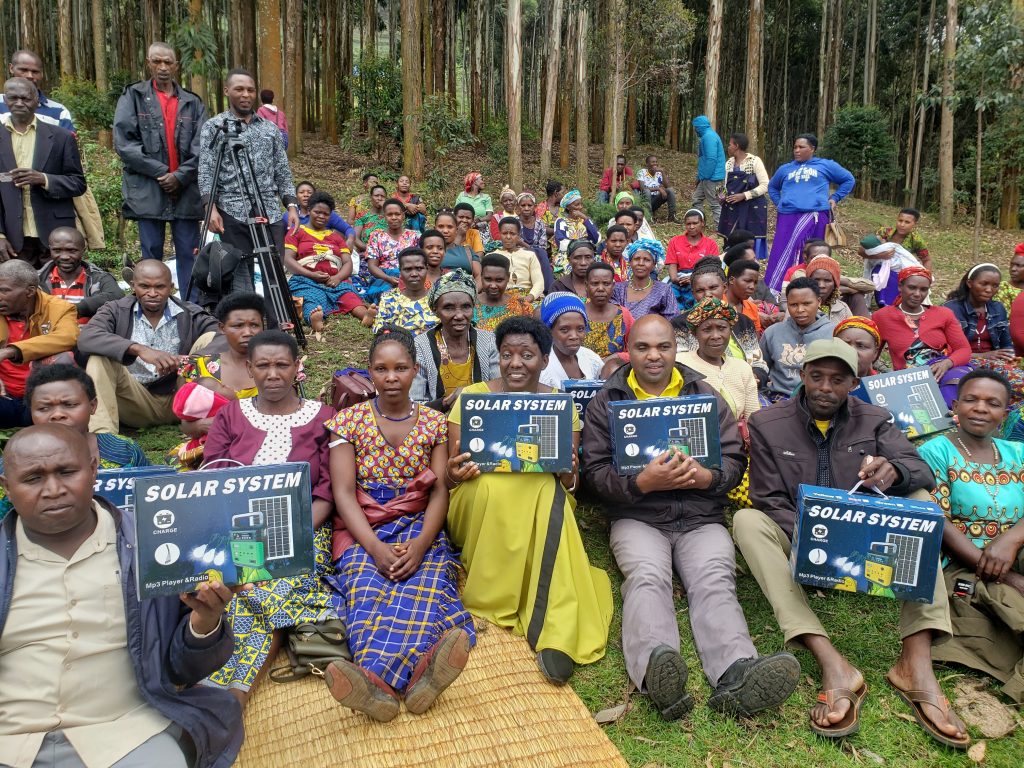
Evelyn Ninsiima Kikafunda, the founder of the Green Environment Project (GEP) and Woman Member of Parliament-elect for Rubanda District, officially launched a large-scale solar distribution project targeting homes beyond the reach of hydroelectric power. The initiative will see more than 300 solar kits distributed to vulnerable families across the district.
For many residents gathered under the bright mid-morning sun, the occasion was a turning point. Mushanje Parish, like many parts of Rubanda District, is defined by its breathtaking but rugged terrain. The rolling hills and scattered homesteads, though picturesque, make extending the national grid electricity both technically challenging and financially out of reach for most families.
As a result, daily life has long revolved around firewood and kerosene.
Breaking free from darkness
Speaking to the crowd, Kikafunda emphasised that the solar distribution is both a development intervention and an environmental protection strategy.
“For years, our mothers have cooked with firewood, and our children have studied under smoky lamps. We cannot talk about development while families remain in darkness. Solar energy gives us clean light, protects our forests and restores dignity to our people,” she said.
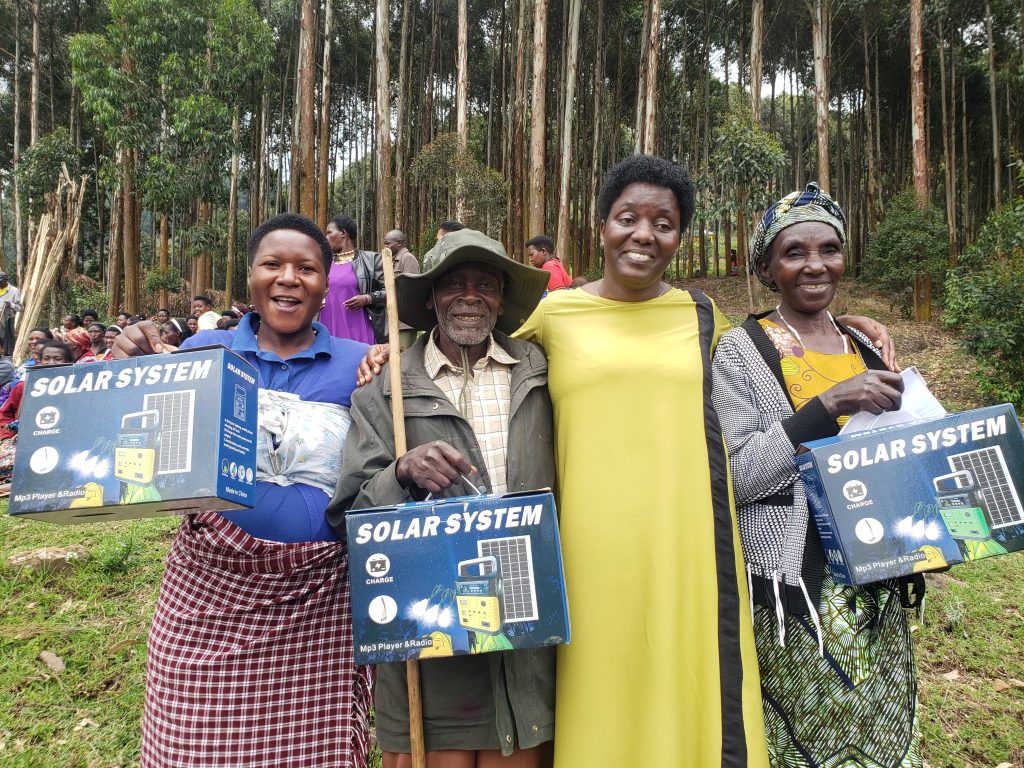
The solar kits include panels, rechargeable batteries, LED bulbs, a radio set and charging ports capable of powering mobile phones and small household devices. Though modest in size, their impact is expected to be far-reaching.
Kikafunda noted that reliance on firewood has contributed to steady deforestation in Rubanda, exposing hillsides to soil erosion and threatening agricultural productivity. By introducing solar lighting, she explained, pressure on forest resources will gradually reduce.
“Our hills are fragile. When we cut trees without alternatives, we destroy our own future. Clean energy is not a luxury; it is a necessity,” she said.
Beneficiaries speak out
For beneficiaries, the project is deeply personal. Patience Tusiime, a mother of four, could barely contain her emotion as she received her solar kit. Her voice trembled as she described nights spent worrying about her children’s health.
“The smoke from paraffin lamps has been disturbing us for years; sometimes, my children would cough the whole night. I feared it was affecting their lungs,” she said.
She explained that buying kerosene every week had become an added financial strain on her already limited income from subsistence farming.
“Each week, I would choose between buying paraffin and buying sugar or soap. Now I can save that money for school books and food. This solar light is not just light, it is relief,” she said.
Isaac Tumwesigye, a father of six, shared a similar story. He recalled how his children would crowd around a single dim kerosene lamp while revising their homework.
“They would struggle to see clearly. Sometimes the lamp would go off because there was no fuel. The children would sleep without finishing their work,” he said.
Tumwesigye believes the new lighting will significantly improve his children’s academic performance.
“With bright light, they will read comfortably. They will compete with children in towns who have electricity. We have been left behind for too long,” he said proudly.
Glorious Tumwikyirize, an elderly grandmother caring for three grandchildren, described how darkness often brought fear.
“When night falls here, it is very dark. If you hear a noise outside, you cannot see anything. We have always feared thieves and wild animals,” she explained.
She added that charging mobile phones required walking long distances and paying a fee at trading centres.
“Sometimes when there was an emergency, my phone had no power. Now I can charge it at home. That alone is a big change,” she said.
A matter of health and safety
Health workers in the area welcomed the intervention, noting that kerosene smoke contributes to respiratory illnesses, particularly among women and children who spend more time indoors. Indoor air pollution remains a silent but persistent problem in rural communities.
Improved lighting also enhances safety. Dimly lit homes increase the risk of accidents, including burns and falls. With solar-powered LED bulbs, families expect safer and more secure evenings.
Local leaders praised Kikafunda’s initiative as a practical demonstration of responsive leadership. They noted that while national electrification programs continue, community-driven renewable energy projects can bridge the gap in remote areas.
“This is development that reaches the grassroots. It addresses real challenges faced by real families,” remarked Wence Bazirake, the Ikumba Sub-county chairperson.
Restoring hope
As technicians demonstrated installation and maintenance procedures, beneficiaries listened attentively, determined to protect their newly acquired assets. Many took photos holding their solar panels, symbolising a new chapter for their households.
Kikafunda revealed that the solar distribution marks the third phase of a broader environmental and development agenda under GEP. Plans include intensified tree planting campaigns, environmental awareness programs in schools and the promotion of other energy-saving technologies.
She reiterated that sustainable development must integrate environmental conservation with economic empowerment.
“When we give light to a home, we give opportunity. Children perform better in school, families save money, and forests are preserved,” she said.
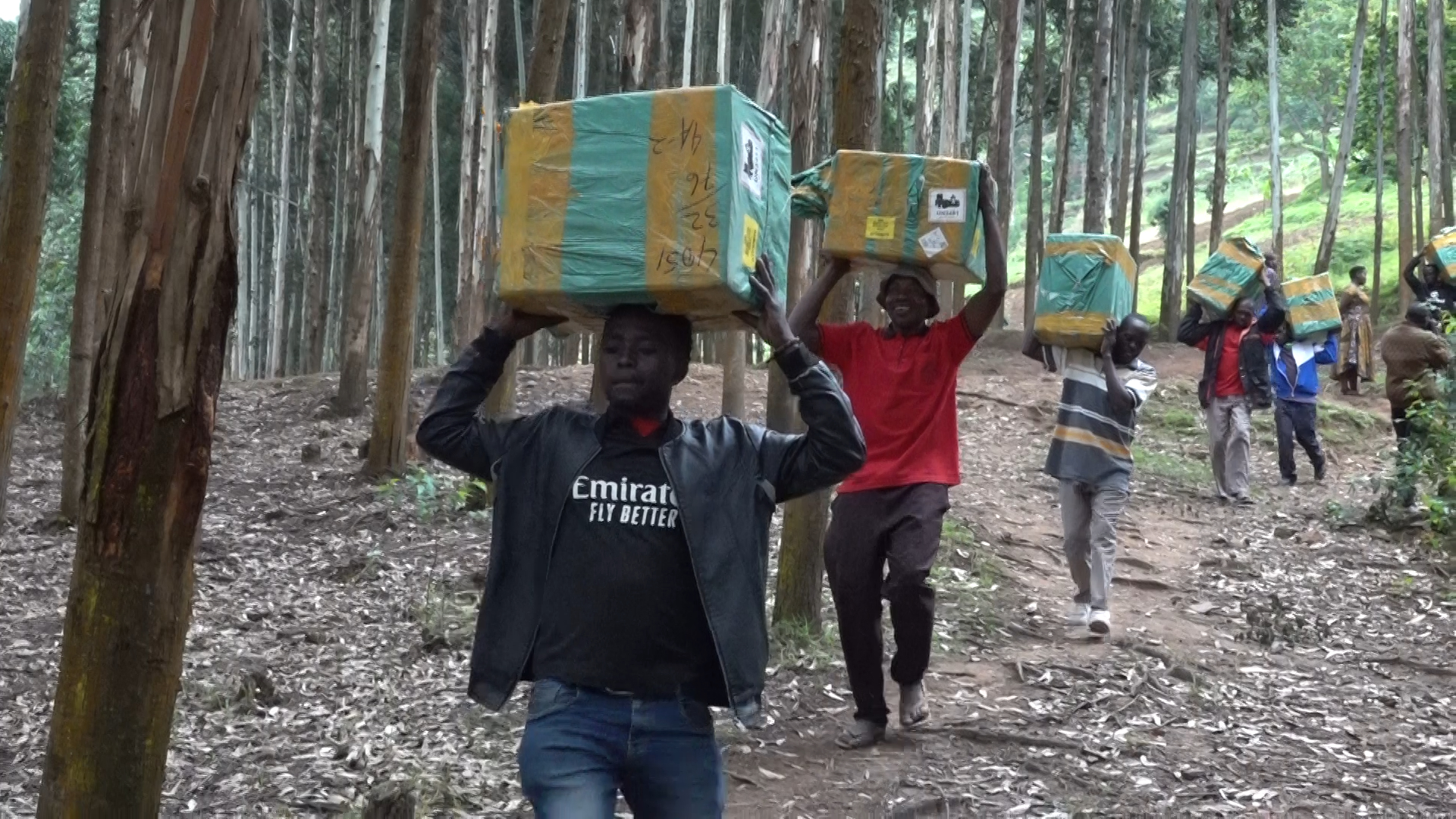
After the event, residents began the long walk back to their villages, solar kits balanced on heads and shoulders, and excitement filled the air. For the first time, many households will switch on a light without striking a match or inhaling smoke.
When night descends over the hills of Mushanje Parish, beams of clean, renewable light will cut through the darkness, quiet yet powerful symbols of change. In those illuminated homes, children will read longer, families will breathe easier, and hope will shine brighter than ever before in the heart of Rubanda District.