

Enock Ndyamuhakyi | Tayari News
KABALE – Following disappointing results in the 2025 Primary Leaving Examinations (PLE), in which several schools trailed, authorities in Kabale District have taken decisive action against persistent poor academic performance by demoting up to 15 head teachers.
The below-average performers have been stripped of their administrative positions and redeployed to classroom teaching. These are schools whose Second Grade classes failed to register even a single pupil, prompting concern among district leaders and renewed calls for accountability in school management and teaching standards.
Administrators whose schools consistently posted poor results are expected to be bitten by the new policy, which takes effect in the next academic year as part of broader reforms aimed at improving learning outcomes across the district.
According to the PLE performance report, a total of 3,467 pupils sat for the Primary Seven examinations in Kabale district. Of these, only 219 pupils passed in first grade, while 1,838 obtained second division and 773 achieved third division. Up to 206 pupils failed, and 58 registered candidates did not sit for the examinations.
The district’s best-performing pupil recorded eight aggregates, a figure that council members described as modest and reflective of deeper challenges in the education system.
The report was presented before the council by the district council Committee on education and health, chaired by Lydia Turyasingura. The committee observed that the high number of poorly performing pupils pointed to serious weaknesses in school leadership, supervision, and classroom instruction.
Kabale District Chief Executive Officer, Robert Mugabe, expressed dissatisfaction with the district’s overall performance and confirmed that disciplinary measures had already been implemented.
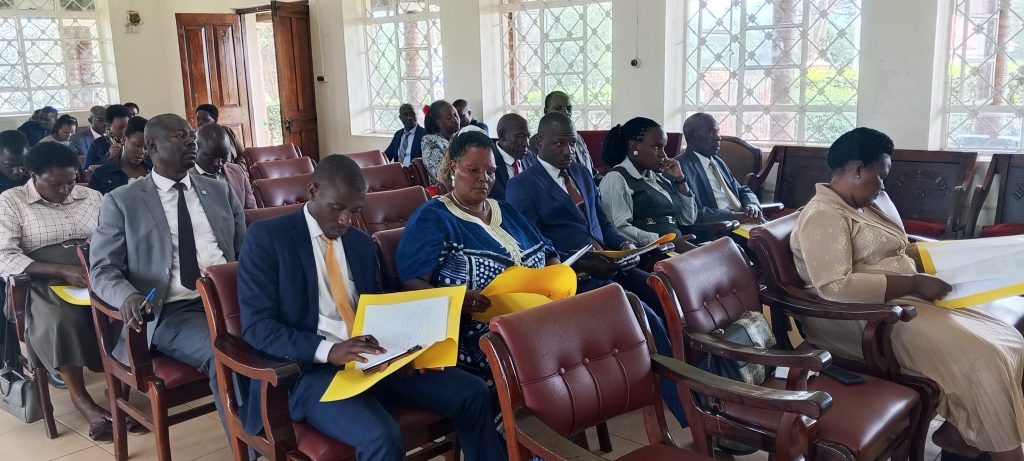
He revealed that 15 head teachers had been removed from their administrative roles and returned to classroom teaching duties, while several other teachers were transferred to different schools in a bid to address long-standing underperformance.
Mugabe said the district is now prioritising the recruitment of competent teachers, particularly in critical subjects, to better prepare learners for national examinations and improve overall learning outcomes.
He further noted that funds will be allocated in the next financial year’s budget to reward best-performing schools, although consultations are still ongoing to determine who will directly benefit from the incentives.
During council debates, members raised concerns about the lack of clarity on who should receive the proposed rewards. Councillors, including Bridget Asinga Tumwesigye from Kyanamira sub-county and Tom Nkazemera of northern division, questioned whether incentives should go to top-performing pupils, head teachers, or classroom teachers.
They proposed that recognition should not be limited to financial rewards alone, suggesting non-monetary incentives such as certificates, trophies, and public recognition ceremonies to encourage healthy competition and sustained improvement among schools.
Call for a clear framework.
The Speaker of Kabale District Council, Flavia Nyinakiiza Kanagizi, urged councillors to develop clear criteria for the proposed awards and define who qualifies as a beneficiary.
She emphasised that a transparent and well-structured framework is necessary to ensure the program motivates schools, improves accountability, and achieves its intended impact.
Kanagizi also warned that without proper guidelines, the reward system could create confusion and disputes rather than inspire excellence.
Education stakeholders say the demotion of head teachers marks a turning point in Kabale District’s efforts to restore discipline and performance in public schools. While some teachers view the move as harsh, others believe it sends a strong message that leadership must translate into results.
As the district prepares to implement its reward-and-sanction policy, parents and community leaders remain hopeful that the reforms will strengthen teaching standards, boost learner morale, and improve future PLE outcomes.
With the next academic year approaching, Kabale’s education sector now stands at a crossroads—where accountability, motivation, and improved staffing could redefine the district’s academic future.